Vicks VapoRub for Prostate: What Science Actually Says
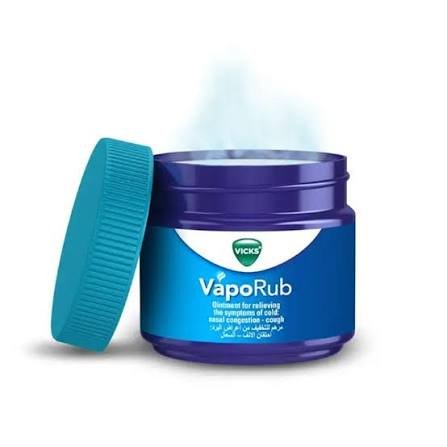
Vicks VapoRub for Prostate :The internet is a breeding ground for unusual home remedies, and few have gained as much traction in recent years as the idea of using Vicks VapoRub for prostate problems. A quick search reveals countless forum posts and social media videos suggesting that rubbing this common menthol chest rub on the perineum can relieve the frustrating symptoms of an enlarged prostate. The promise of a simple, over-the-counter fix for a condition that millions of men find embarrassing is undeniably alluring. But before you reach for that familiar blue jar, it is essential to separate fact from fiction and understand what medical science actually says about this remedy.
The Hard Truth: It Simply Doesn’t Work
To be direct: there is no scientific evidence to suggest that Vicks VapoRub can help with prostate enlargement, prostatitis, or any other prostate condition . Urologists are clear on this point, stating emphatically that rubbing Vicks on the perineum has no effect on prostate health . The idea that it could is a myth that has spread rapidly online, but it has no basis in medical reality .
Why a Surface Remedy Can’t Reach the Prostate
The primary reason Vicks VapoRub cannot help is a matter of basic anatomy. The prostate is a small, walnut-sized gland that sits deep within the pelvis, just below the bladder, and surrounds the urethra . Because of this deep, internal location, it is physically impossible for a topical ointment applied to the skin of the perineum to reach the prostate in any meaningful concentration .
For a chemical to affect the prostate, it would need to penetrate multiple layers of skin, fat, and muscle to reach the glandular tissue deep inside the body. Vicks VapoRub is formulated for topical use on the chest, throat, or back to relieve cough and congestion. Its active ingredients are designed to create a cooling sensation on the skin’s surface, not to penetrate deep tissues . This cooling sensation, produced by menthol and camphor, can be strong and may feel like it is doing something, but it is a purely surface-level effect that provides no therapeutic benefit for the prostate .
Vicks VapoRub for Prostate The Anatomy of the Problem: Understanding BPH
To understand why Vicks is useless, it helps to understand the condition itself. Benign prostatic hyperplasia (BPH) is the medical term for a non-cancerous enlargement of the prostate, a common condition that affects men as they age . BPH is driven by internal processes, primarily hormonal changes involving the production of DHT (dihydrotestosterone), a hormone that fuels prostate growth. The prostate’s enlargement is a structural and cellular process: it is caused by cells multiplying and the tissue growing over many years .
As the prostate grows, it squeezes the urethra, causing a range of troublesome urinary symptoms, including:
- A weak or slow urinary stream
- A feeling of incomplete bladder emptying
- Urinary frequency and urgency
- Nocturia: the need to wake up multiple times during the night to urinate
These symptoms arise from a physical obstruction within the urethra caused by the enlarged prostate. A topical ointment on the skin cannot affect the internal structure of the prostate, change hormonal signaling, or shrink the gland to relieve the obstruction. It cannot alter the structural or hormonal processes that drive BPH.
Safety First: The Risks of Misusing Vicks
Beyond being ineffective, applying Vicks VapoRub to the perineal or genital area carries significant safety risks. The product is formulated exclusively for external use on the chest, throat, and back . Its manufacturer explicitly warns against applying it to sensitive areas or mucous membranes .
The genital and perineal skin is much more sensitive and permeable than the skin on the chest or back. The active ingredients in Vicks—particularly menthol, camphor, eucalyptus oil, and turpentine oil—can cause severe irritation, burning sensations, and allergic contact dermatitis when applied to these delicate tissues .
Potential adverse effects include:
- Severe Irritation and Pain: Both immediate and delayed reactions can occur .
- Contact Dermatitis: This can manifest as redness, swelling, blistering, or rash .
- Urethral Irritation: If the product enters the urethra, it can cause burning and inflammation .
- Camphor Toxicity: Camphor is toxic if swallowed or absorbed in large amounts. Applying it to sensitive, thin skin could theoretically increase absorption and pose a risk .
In short, while the cooling sensation from menthol might be mistaken for a therapeutic effect, it is actually a sign of nerve stimulation that carries a significant risk of local harm .
The “Almost No One Mentions” Fact: A Scientific Dead End
The article you referenced hints at a “thing about how the prostate actually works that almost no one mentions.” This likely refers to the specific biological dead-end of the Vicks theory. While the TRPM8 receptor is expressed in prostate tissue, and menthol is a known agonist of this receptor , this has been studied in the context of prostate cancer and BPH as a potential drug target. These scientific investigations involve highly targeted, often intravenous or oral, delivery of specific compounds to influence cell death or growth. They do not support rubbing menthol on the skin. The pathway from applying menthol to the skin of the perineum to it somehow influencing TRPM8 receptors deep in the prostate is non-existent. The “thing no one mentions” is that the mere presence of a biological target for menthol in the prostate does not mean topical application can reach it. This is a classic example of taking a scientific finding out of context to support an unproven and physically impossible home remedy.
you can check this
Prostavive Best Prostate Supplement
What Science Actually Says Works for Prostate Symptoms
While Vicks is a dead end, there are legitimate, evidence-backed ways to manage BPH symptoms. These options range from lifestyle changes and medications to surgical procedures and, for mild cases, certain herbal supplements.
Proven Medical Treatments
If your symptoms are bothersome, the most reliable path to relief is through a urologist. There are several categories of proven treatments:
1. Lifestyle and Behavioral Modifications: For mild symptoms, changes in daily habits can make a noticeable difference .
- Dietary Changes: Some foods, such as chocolate, citrus, carbonated beverages, and caffeine, can irritate the bladder and increase the urge to urinate. Reducing these may help .
- Fluid Management: Reducing fluid intake in the hours before bedtime can decrease the need to wake up and urinate at night .
- Timed Voiding: Urinating at scheduled intervals (e.g., every hour and a half to two hours) can reduce the sudden urge to go .
2. Medications: If lifestyle changes aren’t enough, prescription medications are often the next step. These are generally effective and well-studied .
- Alpha-Blockers: These drugs work quickly to relax the muscles in the prostate and bladder neck, improving urine flow. Examples include tamsulosin (Flomax) and alfuzosin . Side effects can include dizziness and retrograde ejaculation (dry ejaculation) .
- 5-Alpha-Reductase Inhibitors: These medications, such as finasteride (Proscar) and dutasteride, work by lowering the production of DHT, which shrinks the prostate over time. They can take 3 to 6 months to show noticeable effects but are effective for larger prostates . Side effects can include a lower sex drive and erectile dysfunction .
- PD5-Inhibitors: Daily tadalafil (Cialis), commonly used for erectile dysfunction, can also help relax the smooth muscle of the bladder and prostate, improving urinary symptoms .
3. Minimally Invasive and Surgical Procedures: When medications are ineffective or cause unwanted side effects, or for men with very large prostates, a variety of procedures are available. These are often performed on an outpatient basis and offer lasting results.
- Prostatic Urethral Lift (UroLift): This uses small implants to lift and hold the enlarged prostate tissue out of the way, opening the urethra .
- Steam Therapy (Rezūm): This procedure uses water vapor (steam) to remove excess prostate tissue. The treated tissue is absorbed by the body, shrinking the prostate .
- Transurethral Resection of the Prostate (TURP): This is a classic surgical procedure where a scope is inserted into the urethra, and an electric loop is used to remove excess prostate tissue .
- Laser Therapies (HoLEP, PVP): These use lasers to remove or vaporize prostate tissue, often providing quicker relief and less bleeding than TURP. HoLEP is particularly effective for very large prostates .
- Prostate Artery Embolization (PAE): This procedure works by reducing the blood supply to the prostate, which causes it to shrink over time. It is a good option for men who want to avoid procedures through the urethra .
Natural Treatments: What the Research Shows
For men with mild symptoms who want to try a complementary approach before prescription medications, certain plant-based extracts have been studied for BPH. It is critical to understand that the evidence for these is mixed, and they are not a substitute for seeing a doctor . While some men may find relief, they are not as powerfully effective as prescription drugs and have not been shown to prevent long-term complications like the need for surgery .
- Saw Palmetto (Serenoa repens): This is one of the most popular herbal remedies for BPH . Some older studies suggested it could improve urinary flow and symptoms, with fewer side effects than the drug finasteride . However, more recent and larger reviews, including a major trial in 2006, have shown that saw palmetto is no more effective than a placebo . The evidence is inconsistent at best .
- Pygeum (Prunus africana): An extract from the bark of the African plum tree, pygeum has shown some promise in trials. A Cochrane review of 18 studies found it could improve overall symptoms and reduce nighttime urination . It is thought to have anti-inflammatory properties . However, the trials were small and short-term, and more high-quality research is needed .
- Beta-Sitosterol: This is a plant sterol found in many foods and supplements. A Cochrane review found that beta-sitosterol could improve urinary symptoms and flow rates, though it did not shrink the prostate . It is considered a well-tolerated option for mild symptoms .
- Nettle Root: Some clinical trials have shown positive results for nettle root in improving BPH symptoms, and it is sometimes combined with other herbs like saw palmetto .
The Supplement Post’s Endorsed Formulas: A Critical Look
The original article you provided concludes by recommending three specific supplement formulas: Prostavive, TC24, and Prostadine. It is important to view these recommendations through a critical lens.
- Prostavive: Claimed to be a “multi-pathway” pick, targeting DHT and inflammation. However, as noted by the Merck Manual and other reputable sources, many over-the-counter supplements, even those containing thoroughly studied ingredients like saw palmetto, have not been shown to be more effective than a placebo . The article’s claim of a “longest in category” 180-day guarantee is a marketing tactic, not scientific proof.
- TC24: Marketed as a “nocturia specialist” targeting the bladder-prostate signal. While nocturia is a key symptom of BPH, there is no widely recognized, evidence-based supplement specifically for “bladder-prostate signaling” as it is presented here. The faster 2-4 week “noticeable change” timeline is not supported by the established research on herbal supplements for BPH, which generally takes longer to show effects .
- Prostadine: A liquid supplement claimed to absorb faster. While liquid forms can be absorbed more quickly, this does not necessarily translate to better effectiveness for a chronic condition like BPH. The “early-stage symptoms” targeting is vague, and the emphasis on a “thyroid + anti-inflammatory blend” is not central to the known pathophysiology of BPH.
While these supplements may contain some ingredients that have been studied, the bold claims about their efficacy go far beyond what the scientific literature supports. They are likely promoted through affiliate links for profit. A man with bothersome symptoms is far better off seeing a urologist for a proper diagnosis and discussing evidence-based medical treatments.
The Takeaway: The Only Path That Works
If you are experiencing symptoms of an enlarged prostate, the cooling sensation of Vicks VapoRub might feel like a tempting and easy solution. However, it is a false promise. It is anatomically impossible for a topical rub to reach the prostate, and its use on sensitive skin carries real risks of irritation and injury.
The internet is full of myths and misleading marketing, but the reality is that BPH is a well-understood medical condition with a clear pathway to relief. That pathway begins with a visit to a doctor. A urologist can provide a proper diagnosis, rule out more serious conditions like prostate cancer, and guide you toward the most effective treatment for your specific situation. Whether it’s simple lifestyle changes, a proven medication, or a minimally invasive procedure, medical science offers real, effective solutions. Don’t waste your time or risk your health on internet fads—the only thing that will truly help is evidence-based care.
Read also
Prostadine Review 2026: Ingredients, Benefits, Safety, and What You Need to Know
Aizen Power : My Honest Experience After Trying This Male Enhancement Supplement