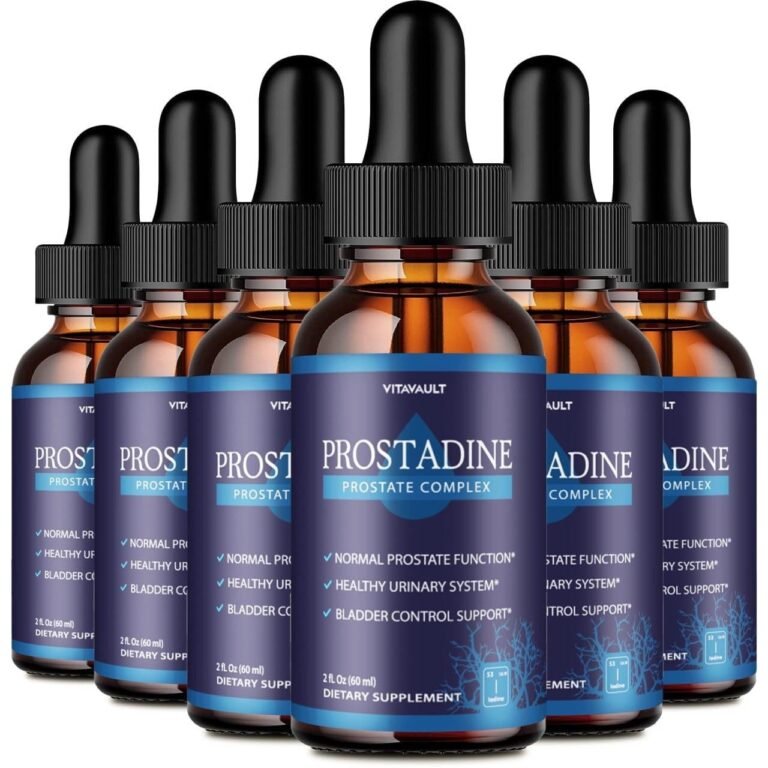
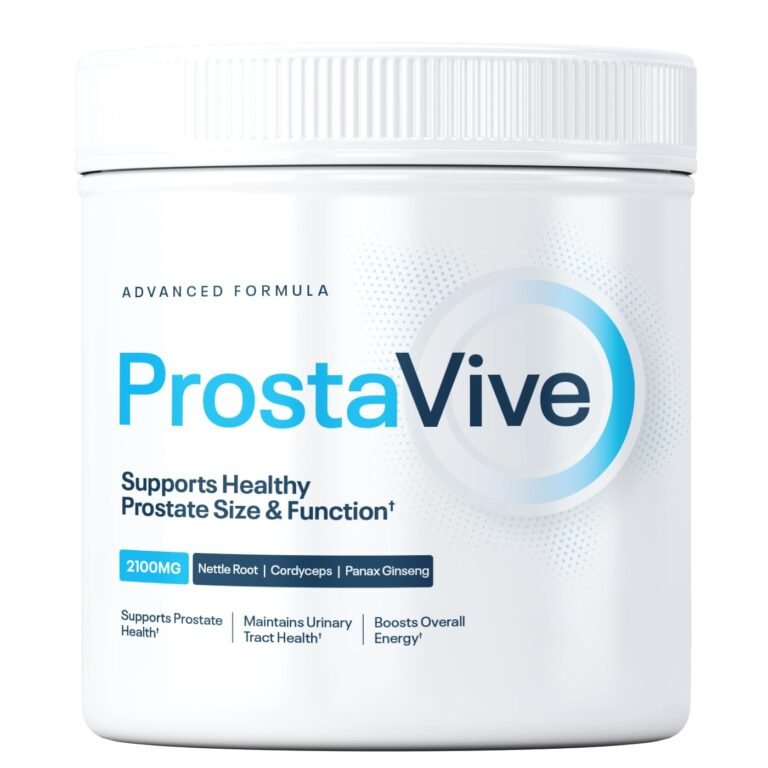
ProstaVive: What It Is, What the Evidence Says, and What to Watch For
ProstaVive is a prostate-health supplement for men, sold online, and I found no independent evidence that it works. Nearly everything written about it is advertising, affiliate content or paid press releases, so everything below comes with that caution attached.
It is marketed to men over 40 as a daily aid for urinary flow, prostate comfort and general vitality. Most descriptions say it is a powder stirred into water or another drink once a day, though a few pages describe capsules. It is sold as a dietary supplement, not a drug, so it does not have to prove in advance that it does anything.
Three things stand out. First, sources disagree about what is in it. Second, the “reviews” are overwhelmingly promotional, and the few independent customer ratings are thin. Third, the headline claims, such as shrinking the prostate or fixing the root cause of urinary problems, are far stronger than any evidence I found for the product itself.
None of that proves ProstaVive is useless or unsafe. It means a buyer has very little reliable information to go on. The sections below cover the marketing claims, the ingredients, pricing, the review landscape, what is known about the likely ingredients, safety, and a practical buying checklist.
This document draws on web searches run on 22 November 2026 and on general medical knowledge. It is not medical advice.
What the marketing claims
The sales pitch is consistent across the pages I found: ProstaVive supports prostate function, urinary flow and male vitality in men over 40. One review frames it as a blood-flow-based powder. Others describe it as aimed at benign prostatic hyperplasia (BPH), the non-cancerous enlargement of the prostate that is common with age.
The claims vary in strength. The mild versions talk about “supporting” prostate health, improving circulation, better sleep and more energy. The strong versions go much further. One page says the ingredients help the body break down excess cells and reduce the size of the prostate. A trade-news item describes the product as treating a “clog” in urinary flow caused by stagnation and toxic buildup, using the language of traditional herbal medicine.
That gap matters. A supplement can legally say it supports a body function. It cannot legally promise to treat or cure a disease, and an honest seller would avoid language about shrinking an enlarged prostate. Some pages do exactly that, while others are careful to say the product is not a treatment for any condition. A 2026 buyer’s review is explicit about this, stating that ProstaVive should be judged as a supplement and not as a treatment.
The practical takeaway is to treat the stronger claims as advertising. If a page promises to shrink your prostate or cure urinary problems, it is promising something the product has not been shown to deliver.
Form and ingredients
The sources do not agree on what ProstaVive is. Most describe a powder you mix into a drink once a day, and some call it a fine powder made in an FDA-registered, GMP-certified facility. Other pages describe two capsules a day, and some mention both formats. That inconsistency alone is a reason to check the label of whatever you are actually shown.
The ingredient lists conflict more seriously. Two versions turned up repeatedly:
| Version | Ingredients listed |
| A (energy and vitality framing) | Boron, tongkat ali, ashwagandha, fenugreek, nettle root, maca root, panax ginseng, artichoke extract (Leadership.ng) |
| B (classic prostate herbs) | Saw palmetto, beta-sitosterol, pygeum bark, zinc, lycopene and others, in capsule or powder form (a promotional PDF) |
These are two quite different formulas. Version A is a mix of adaptogens and “male vitality” herbs. Version B reads like a conventional prostate blend. It is possible the product was reformulated, but more likely the writers copied each other or invented lists to fit the pitch.
No page I found gave the amount of each ingredient per serving. Without doses, an ingredient list says very little. A product can list a herb and contain a trivial amount of it, and a proprietary blend can hide the quantities entirely.
The only reliable source is the supplement facts panel on the product you receive. If the seller cannot show you a clear label with amounts, treat that as a red flag.

Pricing and guarantees
Prices differ by page, which is itself worth noting. One promotional page lists a one-month supply at $69 plus shipping and advertises a 50% discount. Another promotional page pushes an “86% off” limited-time offer. A third mentions free shipping and a 60-day guarantee. Other pages mention a 30-day trial or a 100% money-back guarantee.
I could not verify any of these terms from the manufacturer or from a neutral source. Percentage discounts against an unstated original price are a common sales tactic, and the length of the guarantee changes from page to page. Reviewers also list limited availability and slow shipping of three to five business days as drawbacks.
If you do consider buying, a few points are worth checking before you pay:
• The refund terms, in writing, on the page where you actually order.
• Whether the offer is a one-time purchase or a subscription that renews automatically.
• The total cost including shipping, not just the headline monthly price.
• A company name, address and working support contact. One page I found lists only a support email address, which is thin.
A genuine guarantee is only as good as the company’s willingness to honour it, and for an unfamiliar online seller you cannot easily test that in advance.
The review landscape
Searching for ProstaVive returns a wall of “reviews” that are almost all promotional. Understanding where they come from is the most useful thing a prospective buyer can do.
Paid press releases and advertorials. Many pages are syndicated releases on newswire services. One advertorial states openly that it contains affiliate links and that a commission may be earned if you buy. Several others carry ClickBank tracking links, which pay the writer when a reader orders.
Pages hosted in odd places. A large share of the results are PDFs and pages uploaded to unrelated university, nonprofit and government-style websites through public upload forms. Others sit on free portfolio and page-builder sites. These are not endorsements by those organizations. They are a search-engine tactic to make promotional text look credible.
Contradictory verdicts. Some titles promise a “scam exposed” warning, others declare the product legit, and many are clearly written from the same template. Several titles claim to be an unbiased investigation while linking straight to an order page.
Complaints explained away. A 2025 press release lists unrealistic expectations, counterfeits and competitor sabotage as the reasons behind negative reviews. Some of that may be true, since counterfeits are common online. But a seller who attributes every complaint to someone else is not offering evidence the product works.
Thin customer ratings. On Trustpilot, one page shows 7 reviews and a 4.5 score, which is too few to mean much, while another page shows none.
The upshot is that the volume of positive coverage tells you about the marketing budget, not about results.
What the evidence says about the ingredients
This section comes from general medical knowledge, not from the product pages, and it is approximate. No ProstaVive-specific clinical trial turned up in my searches, so the best we can do is look at what the commonly listed ingredients have shown on their own.
• Saw palmetto, beta-sitosterol and pygeum are the classic herbal choices for urinary symptoms. Large, well-run trials of saw palmetto have generally found little or no benefit over placebo for BPH symptoms. Beta-sitosterol has somewhat better small-study support for improving flow, and pygeum has modest, older evidence. None has been shown to shrink the prostate meaningfully.
• Nettle root is used in Europe for BPH symptoms and has some limited evidence, mostly in combination products.
• Zinc and lycopene are nutrients with an interest in prostate research, but evidence that supplements treat BPH is weak.
• Tongkat ali, maca, fenugreek and panax ginseng are mainly promoted for libido, energy or testosterone. The evidence for these in men is small, short-term and mixed, and none is a recognised treatment for prostate enlargement.
• Ashwagandha has some evidence for stress and sleep, but not for prostate symptoms.
• Boron and artichoke extract have little to no evidence for prostate health.
Two broader problems apply. First, many herbal supplement trials are small, short and funded by the makers. Second, a product that combines many ingredients cannot borrow the evidence for each one. Combining small doses of several herbs does not add up to the dose that was studied for any of them, and the combination itself has not been tested unless someone ran that trial.
Some men do report feeling better on herbal blends, and placebo response is strong in urinary symptoms, which are partly subjective. That is not the same as evidence the product does what it claims.
Safety and interactions
Marketing pages routinely call ProstaVive well tolerated, natural and free of chemicals, stimulants or additives. “Natural” does not mean safe. Herbs are active substances, and they can interact with medicines and with health conditions. The notes below are general, so ask a pharmacist or doctor about your own situation.
• Blood thinners and blood pressure medication. Panax ginseng can affect how some blood thinners work, and several herbs can nudge blood pressure up or down.
• Diabetes medication. Fenugreek, ginseng and some other herbs can lower blood sugar, which matters if you already take drugs that do the same.
• Thyroid and sedative medication. Ashwagandha has been linked to effects on thyroid hormone levels and can add to the effect of sedatives. Rare reports of liver injury have also been linked to it.
• Hormone-sensitive conditions. Tongkat ali and similar herbs are promoted for testosterone. Men with prostate cancer, or at risk of it, should be cautious about anything marketed to affect male hormones.
• Prostate drugs. If you take finasteride, dutasteride or an alpha blocker such as tamsulosin, adding herbs that act on the same pathways is something to discuss first.
• Surgery. Many herbs should be stopped some weeks before an operation because of bleeding and blood-pressure effects.
There is also a quality risk specific to supplements. They are not approved or batch-tested by regulators before sale, so contents can differ from the label. Statements about FDA registration and GMP certification describe the manufacturing site, not proof that the product is safe or effective.
Stop taking it and seek medical advice if you notice yellowing skin or eyes, severe stomach pain, a racing heart, dizziness, rash or swelling.
Prostate symptoms in context
The biggest risk with a supplement like this is not the capsule or powder itself. It is the delay in getting a proper diagnosis. Weak urine flow, a frequent need to urinate, getting up several times at night, a feeling that the bladder is not empty, or dribbling are common in men as they age. Often the cause is BPH, but the same symptoms can come from a urinary infection, bladder problems, diabetes, medication side effects, or less commonly prostate cancer.
A doctor can tell these apart with a short history, a urine test and sometimes a blood test (PSA) and a physical examination. BPH has well-established treatments, including prescription drugs and procedures, plus lifestyle steps like limiting evening fluids and caffeine. Men often do well once the cause is identified.
Seek medical care promptly, not later, if you have blood in your urine, pain when urinating, fever, pain in the lower back or pelvis, an inability to pass urine, or unexplained weight loss. Sudden inability to urinate is an emergency.
If you are over about 50, or have a family history of prostate cancer, ask your doctor about whether screening makes sense for you. The decision involves trade-offs and is worth making with a professional, not with a sales page.
In short, if you have symptoms, see a doctor first. A supplement can still be a conversation topic at that appointment, and bringing the label along lets the doctor check it against your other medicines.