The Synaptigen — Trending Cognitive Support Supplement (October 2026 Update)
Disclosure: This article may contain affiliate links. If you purchase through these links, the publisher may receive compensation at no extra cost to you. This is not medical advice. Statements about dietary supplements have not been evaluated by the FDA. Consult a healthcare professional before starting any supplement.
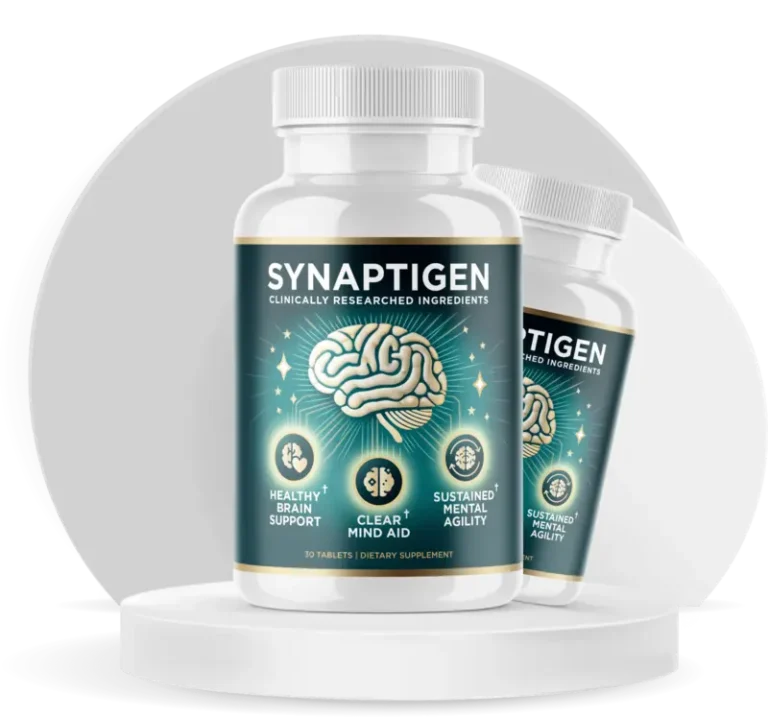
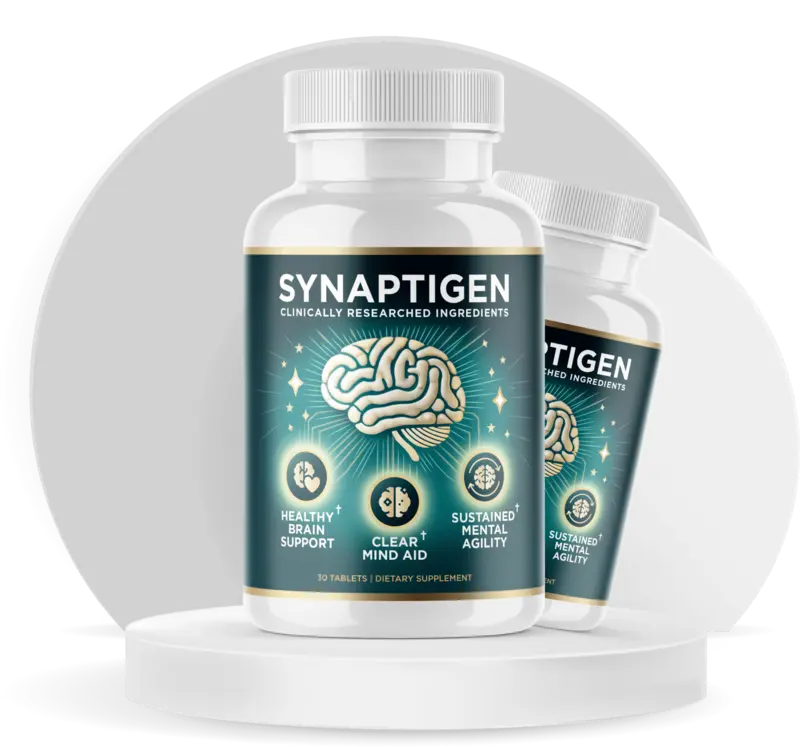
What Is The Synaptigen?
The Synaptigen is sold as a stimulant-free daily cognitive support supplement for adults, generally positioned toward the 45+ demographic and marketed around memory, focus, mental clarity, and “synaptic health.” It is sold only through online storefronts, processed through ClickBank, and is not available in retail stores.
The product’s positioning has shifted across versions. The probiotic version is built on the gut–brain axis, combining three Lactobacillus/Bifidobacterium strains with inulin and flavour extracts. The three-ingredient version is a synaptic-density formula built on magnesium L-threonate, lion’s mane mushroom, and phosphatidylserine — an unusually coherent evidence-based stack. The nine-ingredient version is a broader adaptogen-and-nootropic blend. These are not minor reformulations; they are different products sharing a name.
The sales funnel is also a story in itself. One independent analysis of the video sales letter found that the presentation spends far more time on a fear-based narrative about “crystal spikes” coating neurons and an “egg toast recipe” than on the actual product label — and that the transcript does not disclose a confirmed ingredient list, a price, or a guarantee. That gap between the emotional pitch and the disclosed product is the defining feature of the Synaptigen sales ecosystem.
Who Should Consider The Synaptigen?
The realistic candidate:
- Adults 45+ who want a stimulant-free cognitive supplement and are willing to request the full Supplement Facts panel with per-ingredient milligrams and CFU counts before paying
- Someone specifically interested in the magnesium L-threonate / lion’s mane / phosphatidylserine combination, which has the strongest ingredient-level rationale of the versions described
- Buyers who understand that cognitive supplements operate over 8–16 week horizons, not days, and who will pair supplementation with sleep, exercise, and medical care
- People who will buy only through ClickBank with a saved checkout screenshot, and who will confirm in writing whether the order carries any recurring charge
Who should not buy:
- Anyone who cannot obtain a full label with doses before purchasing — the dose opacity is the core problem across every version
- People on anticoagulant therapy — phosphatidylserine has mild blood-thinning properties, and lion’s mane has antiplatelet preclinical data
- Anyone expecting fast results — the relevant trials ran 8–16 weeks
- Shoppers who cannot confidently identify the official checkout — multiple look-alike domains carry trust scores as low as 1/100, 9/100, and 15/100, with documented complaint patterns of payment without delivery, wrong product, or inferior counterfeits
- People who are pregnant, nursing, or managing a health condition without medical clearance
Quick Product Overview
How Does The Synaptigen Claim to Work?
The probiotic version proposes that gut bacteria influence brain function through immune, metabolic, and nerve signalling — the gut–brain axis. The strains named have been studied for associations with inflammatory markers, stress response, and emotional processing pathways, but not as a finished blend for memory in healthy adults. The supporting meta-analysis pooled 34 RCTs and found probiotics improved cognitive scores, most clearly after 12 weeks — but rated every finding as low-certainty evidence and concluded the evidence “remains highly uncertain, warranting further rigorous trials” .
The three-ingredient version has the most coherent rationale. Magnesium L-threonate has synapse-density research; lion’s mane has NGF-related preclinical and small human data; phosphatidylserine has membrane-integrity and memory trials. Each is backed by published human RCTs at specific doses — a rare formulation coherence .
The nine-ingredient version is a conventional nootropic stack with adaptogens and cholinergics; the ingredients have varying levels of human evidence, but none of the doses are disclosed.
The universal limitation: no clinical trial of any finished Synaptigen formula exists. The marketing cites ingredient-level research, not product-level evidence. And because the per-ingredient doses are withheld, there is no way to confirm whether the formula matches the clinical benchmarks that make its ingredients look credible. As one reviewer put it, the verdict “hinges entirely on dose disclosure” — and that disclosure is not provided .
The video sales letter adds a separate credibility problem: it frames memory decline as caused by “crystal spikes” of hidden sugar coating neurons, and sells an “egg toast recipe” as a solution . That narrative has no scientific basis and is a stronger signal about the marketing than about the product.

Ingredients: What’s Inside?
Because the formula varies, the table below maps ingredients across versions with evidence caveats.
What is not disclosed across all versions: per-ingredient milligram amounts, probiotic CFU counts, allergen information, and third-party testing documentation. The formula may be proprietary, but a cognitive supplement without disclosed doses cannot be responsibly compared to the research that makes its ingredients interesting .
Health Benefits
Claimed primary benefits (per marketing):
- Enhanced cognitive clarity
- Memory function support
- Mental energy
- Relaxation and focus
- Brain health and concentration
- Stress reduction
What the evidence actually supports:
- The three-ingredient stack has the strongest rationale — each component has human RCTs, but the product’s doses are unverified .
- Probiotics show a real but low-certainty cognitive signal, most clearly after 12 weeks, in heterogeneous trials that do not map cleanly onto this specific blend .
- The nine-ingredient stack is a plausible nootropic blend with variable ingredient-level evidence and no disclosed doses.
Important caveat: The “4.6/5 from 2,400+ reviews” figure is a promotional claim, not an independently verified rating . At least one reviewer has publicly stated: “I am extremely doubtful that any of the good reviews here are genuine” .
Pros and Cons
Pros
- The three-ingredient version has genuine formulation coherence — magnesium L-threonate, lion’s mane, and phosphatidylserine are each backed by published human trials at specific doses, a rarity in the cognitive category
- Stimulant-free positioning — no caffeine or racetams, which suits people sensitive to stimulation
- ClickBank processes the order, providing a third-party retailer of record
- Named order-support channels (phone and email) and a written return process
- The six-bottle option includes free domestic shipping
Cons
- The formula is inconsistent across storefronts — probiotic, three-ingredient, and nine-ingredient versions all trade under the same name
- Per-ingredient doses and probiotic CFU counts are withheld — the single biggest flaw
- No clinical trial of any finished Synaptigen formula
- Refund window is stated as both 60 days and 180 days depending on the source
- Multiple look-alike domains carry severe trust warnings: Gridinsoft scores of 15/100, 9/100, and 31/100; ScamAdviser scores of 1/100 and 0 — with complaints of “payment without delivery, wrong product, or inferior counterfeits”
- Owner identity is hidden via WHOIS on multiple domains
- The VSL sells an unsupported “crystal spike” narrative and an egg toast recipe rather than a disclosed product
- A Trustindex reviewer alleges the business “lost their license on June 25, 2026” and calls the positive reviews fake
How to Use The Synaptigen for Best Results
Stated use (varies by version): One tablet daily, dissolved or chewed slowly in some descriptions; capsule in others . Confirm the format and serving on the official label.
Tips consistent with the evidence base:
- Request the full Supplement Facts panel with per-ingredient milligrams and CFU counts before purchasing. This is not optional — it is the only way to evaluate whether the formula matches the trials.
- Take consistently for at least 8–12 weeks; the relevant research horizons are 8–16 weeks for lion’s mane and Mg L-threonate, and ~12 weeks for probiotics .
- Pair with sleep, exercise, and medical care — the product is not positioned as a treatment for cognitive impairment.
- Save a screenshot of the final checkout screen and ask support in writing whether your order carries any recurring charge .
What to avoid: Buying from any domain other than the ClickBank-processed checkout; assuming a higher dose will produce faster results; using with anticoagulants without medical clearance; and purchasing without a disclosed label.
Results Timeline: What to Expect
No product-specific timeline is established by a trial. Evidence-aligned expectations:
- Weeks 1–4: No reliable cognitive change is expected. Any perceived effect is likely placebo or routine-related.
- Weeks 8–12: The probiotic and lion’s mane evidence clusters around this window, but at low certainty .
- Beyond 12 weeks: The honest question is whether the supplement, at whatever dose it contains, is better than the lifestyle basics — sleep, exercise, and medical management — that have stronger cognitive evidence.
Individual results vary, and there is no guarantee of any specific cognitive outcome.
User Reviews & Outcomes
Verified, independent user reviews are scarce, and the signals that exist are mixed to negative.
- A promotional figure of 4.6/5 from 2,400+ reviews appears in one source, but it is unverified .
- A Trustindex reviewer states: “I am extremely doubtful that any of the good reviews here are genuine. This business is no longer operational, as they lost their license on June 25, 2026, yet they’re still listed as active. Misleading and disappointing.”
- Side-effect reports are mild: some users report headaches or slight stomach upset .
- Domain-level complaints across look-alike Synaptigen sites describe payment without delivery, wrong product, or inferior counterfeits . These are not necessarily complaints about the core product, but they are complaints about the ecosystem that sells it.
Bottom line: The review record does not support the promotional rating, and the most specific independent complaint alleges the business is no longer licensed. Treat every testimonial on an affiliate page as marketing.
Are There Any Side Effects?
No product-specific safety trial exists because the doses are undisclosed. Ingredient-level cautions:
- Phosphatidylserine: Mild blood-thinning properties — consult a doctor if you take anticoagulants .
- Lion’s mane: Antiplatelet preclinical data — relevant for people on blood thinners .
- Huperzine A (nine-ingredient version): Acetylcholinesterase inhibition is a drug-like mechanism; it can interact with Alzheimer’s medications and should not be combined with them without medical supervision .
- Ashwagandha: May affect thyroid function in some users; consult a doctor if you have thyroid conditions.
- Probiotics: Generally safe, but immunocompromised individuals should consult a doctor.
User-reported side effects are limited to mild headaches and stomach upset in some accounts . Consult a healthcare professional before use if you are pregnant, nursing, taking prescription medication, or managing any health condition.
Is The Synaptigen Legit or a Scam?
The product may physically exist and ship in some cases, but the sales ecosystem carries documented, severe risk signals, and the product itself withholds the information needed to evaluate it.
Mitigating factors:
- ClickBank is the named retailer, providing a third-party refund channel .
- Phone and email support are listed, and a written return process exists .
- One independent reviewer describes the three-ingredient formulation as “the most scientifically coherent formulation we have reviewed in the online cognitive category” — a genuinely positive signal about that version’s ingredient choices .
Risk signals:
Additional structural concerns:
- The refund window is stated as both 60 and 180 days, which means buyers cannot rely on a consistent term without confirming at checkout .
- The VSL’s “crystal spike” mechanism and egg toast recipe are unsupported and function as fear-based marketing .
- A reviewer alleges the business lost its license in June 2026 .
- The formula inconsistency itself is a transparency failure — a buyer cannot know which product they are getting without verifying the label.
Verdict: Synaptigen is not a confirmed “product never arrives” scam in every case, and the three-ingredient version has real formulation merit. But the combination of withheld doses, inconsistent formulas, conflicting refund terms, scam-flagged domains at 0/1/9/15/31 trust scores, and an unsupported central sales narrative places it in a higher-risk category than an ordinary supplement with weak evidence. If you choose to proceed, buy only through the ClickBank checkout, request the full label with doses before paying, save the checkout screen, and confirm refund terms in writing.
Exclusive Bonuses
None were confirmed in reliable sources. The VSL’s “egg toast recipe” is part of the sales presentation, not a verified product bonus .
Pricing & Money-Back Guarantee
- Refund window: 60 days in one source; 180 days in two others — confirm at checkout .
- Return process: “Return all bottles and packing slip” per the stated terms .
- Recurring billing: The contact page includes the question “Am I enrolled to a subscription?” — ask support to confirm in writing whether your order has any repeat charge before submitting payment .
Final Verdict
The Synaptigen is a product with a genuinely interesting version and a deeply problematic sales ecosystem. The three-ingredient formulation — magnesium L-threonate, lion’s mane, and phosphatidylserine — is the most scientifically coherent cognitive stack an independent reviewer has assessed in this category, and each component has real human RCTs behind it . The probiotic version targets a legitimate research area, even if the evidence is low-certainty .
But the version you receive may not be the version you read about, the doses are hidden, the refund window is inconsistent, and the domains selling it carry trust scores as low as 0, 1, 9, and 15 out of 100 . The video sales letter sells a “crystal spike” story with no scientific basis . And a reviewer alleges the business lost its license in June 2026 .
Buy it only if you can obtain a full Supplement Facts panel with per-ingredient milligrams and CFU counts, confirm the exact version and refund terms at the ClickBank checkout, and accept that you are running a personal 8–12 week experiment with no product-level evidence behind it. Skip it if you need disclosed doses before spending, take anticoagulants, or cannot confidently distinguish the official checkout from the look-alike domains that dominate search results.
This article is for informational purposes only and is not medical advice. Statements about dietary supplements have not been evaluated by the FDA. Consult a healthcare professional before starting any supplement.
Editor’s compliance notes for publication: (1) Confirm or remove the author byline — do not use “Dr./MD” unless credentialed and verified. (2) The 4.6/5 rating from 2,400+ reviews is a promotional figure, not independently verified; do not present it as a neutral rating. (3) Resolve the 60-day vs. 180-day refund conflict at checkout before publishing. (4) Do not link to any of the scam-flagged domains named in this review. (5) The Trustindex allegation about license loss is unverified and should be attributed as a reviewer claim, not stated as fact. (6) Do not add testimonials or cognitive-efficacy claims beyond what is attributed here.