South Beach Collagen Filler Serum Review — A Moisturizing Serum Sold as a Needle-Free Filler (November 2026)
South Beach Collagen Filler Serum :Disclosure: This article may contain affiliate links. If you purchase through these links, the publisher may receive compensation at no extra cost to you. This is not medical advice. Statements about cosmetic ingredients have not been evaluated by the FDA. Consult a dermatologist before starting any new skincare product, especially if you have sensitive skin or a known allergy.
Overview
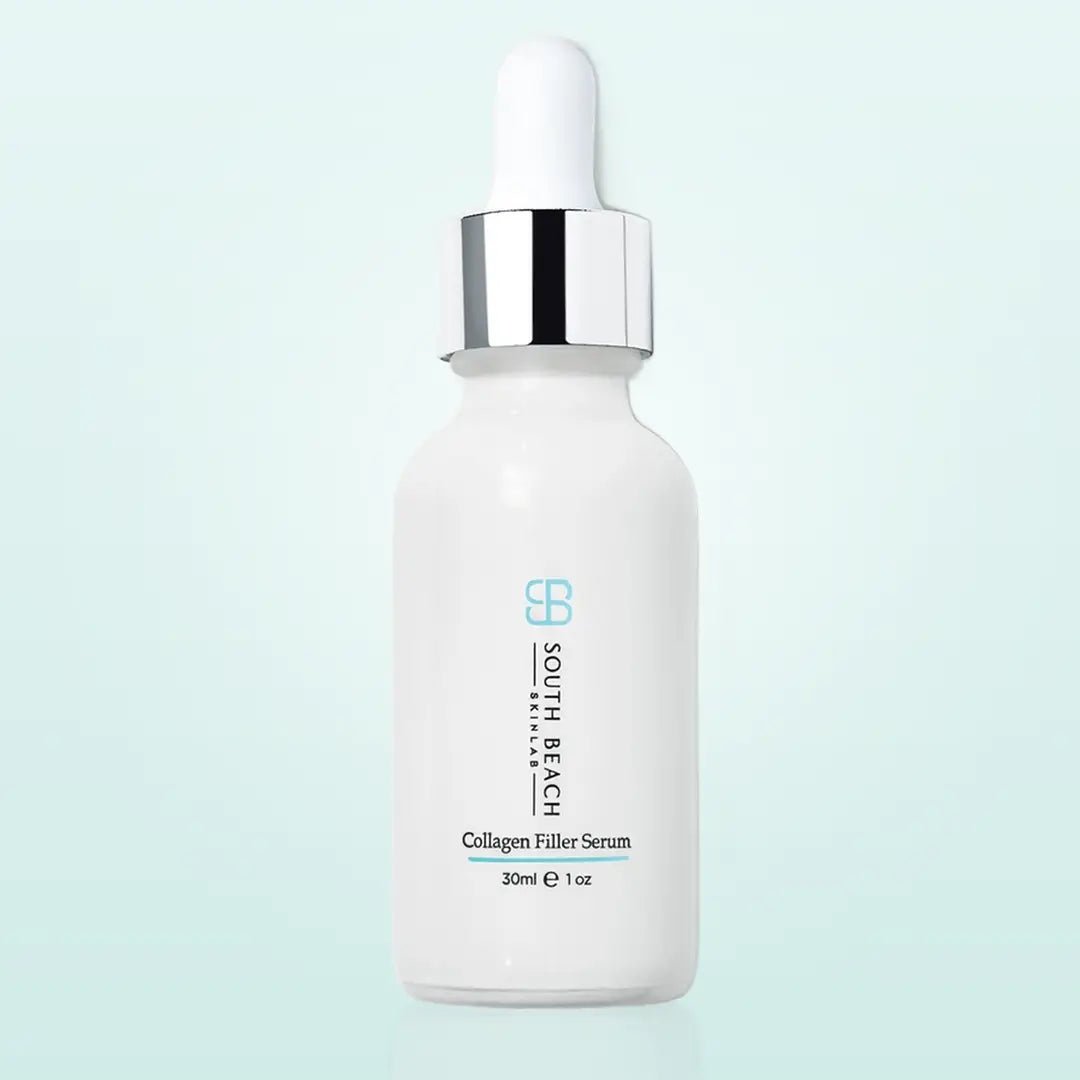
South Beach Collagen Filler Serum is a twice-daily topical serum sold by South Beach Skin Lab, a brand founded by Dr. Ryan Shelton. It is applied in the morning and at night after cleansing and before moisturizer, avoiding the eye area. A bottle is 30 mL, and pricing sits at roughly $47–$59 per bottle depending on the retailer and bundle.
The formula is built around glycerin, sodium hyaluronate, soluble collagen, algae extract, and palmitoyl tripeptide-5 (SYN-COLL), with ascorbyl glucoside (a vitamin C derivative) and several preservatives and botanical extracts. The full cosmetic ingredient list is published, which is more transparency than many competitors offer.
The central framing problem is the word “filler.” A cosmetic serum is not an injectable dermal filler, and no topical product replaces lost facial volume. The most useful independent assessment frames the product as a hydrating serum with recognizable moisturizing ingredients — and scores it accordingly, not as a filler substitute.
What’s in It
What’s disclosed: the complete cosmetic ingredient list, including the base and preservative system.
What’s not disclosed: the concentration of any active ingredient — including sodium hyaluronate, soluble collagen, SYN-COLL, and ascorbyl glucoside. One independent review notes that the page does not state sodium hyaluronate concentration or a measured amount per drop, and warns against inferring dose from list position.
How It’s Positioned to Work
The marketing describes a needle-free alternative to injectable fillers: soluble collagen delivered “directly into areas other creams can’t reach,” with immediate plumping and long-term collagen stimulation.
Where the logic is genuinely supportive: the humectant base is real. Glycerin and sodium hyaluronate are legitimate moisturizing ingredients, and a water-binding formula can reduce the visibility of dryness lines and leave skin feeling smoother. That is a real, modest benefit. The peptide and vitamin C derivative are reasonable cosmetic inclusions.
Where the logic breaks:
1. Topical collagen does not replace dermal collagen. The sales story describes collagen “filling creases from within.” One independent review states the mechanism should not be accepted as an established result, because the primary material does not show a controlled finished-product trial demonstrating replacement of lost dermal collagen. An oral collagen study would not settle the topical question either.
2. A serum is not a filler. The AAD’s guidance emphasizes realistic expectations and a basic routine of sunscreen and moisturizer. This serum can be compared as an optional addition to that routine, not as a replacement for in-office volume restoration.
3. The “97% of users” figure is seller-reported. The official website claims 97% of users reported visibly plumper-looking skin within 14 days, with the standard caveat that individual results vary. No independent trial is cited.
4. No finished-product trial exists. The ingredient-level research on peptides and hyaluronic acid is real, but none of it tests this specific serum.

What It May Be Good For
A well-formulated daily moisturizing serum. The humectant base — glycerin, sodium hyaluronate, and aloe — is the part of the formula with the clearest, most reliable benefit. If your goal is hydration and a smoother surface feel, this is a reasonable product.
A readable, fully disclosed ingredient list. The complete cosmetic list is published, including preservatives. That is more than many competitors offer, and it lets you check for known allergens before buying.
A peptide-and-vitamin-C addition to an existing routine. SYN-COLL and ascorbyl glucoside are legitimate cosmetic ingredients, and layering them under moisturizer is a sensible approach — provided you are not expecting filler-level results.
A convenient twice-daily format. Morning and night application after cleansing is simple to maintain, and the 30 mL bottle is a standard size for a serum.
What to Keep Expectations Realistic About
Filler-level plumping. A topical serum cannot replace lost facial volume. The “filler” language describes a cosmetic surface effect, not structural restoration.
Active concentrations. None are disclosed, so you cannot compare the formula to the studies that make its peptides and hyaluronic acid interesting.
A finished-product trial. None exists.
The refund policy. Affiliate pages have advertised 180 days, but the official terms state a 30-day money-back warranty counted from shipment, with buyer-paid tracked return shipping. That is a materially narrower window than the marketing suggests.
A clean complaint record. Independent platforms carry repeated accounts of non-delivery, products that did not match the listing, and refunds that were refused or only partially offered. One reviewer described paying for return shipping and never receiving a refund, calling it “a complete scam”. Another reported that the listed company address appeared invalid and that the overwhelmingly positive reviews seemed unreliable.
A clean domain landscape. ScamAdviser gives one South Beach Skin Lab domain a trust score of 41 and warns it “might be a scam”. PissedConsumer shows a 2.6/5 rating across six reviews, with complaints about products not received and refunds not honored.
The “Dr. Ryan Shelton” credential. Dr. Shelton is presented as the brand’s founder and a board-certified doctor. That credential is real as far as it goes, but an independent investigation has examined reported MD misrepresentation and unsubstantiated supplement claims across a multi-brand network linked to him — which is relevant context for how the brand’s marketing should be weighed.
Who It Suits
- Adults who want a hydrating, peptide-containing serum and understand it is a moisturizer, not a filler
- People who value a fully published ingredient list and will check it against known allergies
- Anyone layering a serum under moisturizer and sunscreen as part of a basic routine
- Buyers who will buy only through a verifiable checkout and confirm the refund terms in writing
- People who will patch-test first, given the preservative system and botanical extracts
Who Should Skip It
- Anyone expecting injectable-filler results — no topical serum delivers that
- People who need disclosed active concentrations before buying
- Anyone with a known allergy to preservatives, propylene glycol, or botanical extracts without checking the full list first
- Shoppers who cannot verify the retailer — the complaint record includes non-delivery and counterfeit or mismatched products
- Anyone relying on a 180-day refund — the official policy is 30 days from shipment, with buyer-paid return shipping
- People looking for a single product to replace sunscreen and moisturizer — the AAD’s basic routine remains the foundation, and this serum is an optional addition
Practical Buying Notes
- Confirm the price at checkout. Retail pricing runs roughly $47–$59 per 30 mL bottle, with bundle pricing lower per unit. The “original price” figures are anchors, not verified former prices.
- Read the official refund policy, not the affiliate page. The enforceable terms are 30 days from shipment, tracked buyer-paid return shipping, and a return authorization requirement. Screenshot the terms at checkout.
- Buy from the official site or a verifiable retailer. Marketplace listings have been associated with mismatched products and refused refunds, and third-party sellers may not honor the official policy.
- Check the domain before entering payment details. Trust scores on South Beach Skin Lab domains include 41/100 with a “might be a scam” summary.
- Patch-test on your inner forearm for 24–48 hours before applying to your face, especially if you have sensitive skin or a history of reactions to cosmetics.
- Photograph the bottle and batch code on arrival and compare the label with the full ingredient list described here.
Bottom Line
South Beach Collagen Filler Serum is a legitimate moisturizing serum sold with filler-adjacent language it cannot support. The humectant base — glycerin, sodium hyaluronate, and aloe — is real, the peptide and vitamin C derivative are reasonable cosmetic inclusions, and the full ingredient list is published, which is more than many competitors manage. As a hydrating serum layered under moisturizer, it is a sensible product, and independent reviewers score it 6.6/10 (“Recommended”) on that basis.
But the “filler” framing overshoots the evidence. Topical collagen does not replace dermal collagen, the active concentrations are undisclosed, and no finished-product trial supports the plumping claims. The official refund is 30 days from shipment, not the 180 days advertised elsewhere. The complaint record includes non-delivery, mismatched products, and refused refunds. And the domain trust score sits at 41/100 with a “might be a scam” warning.
Buy it if you want a hydrating peptide serum and will judge it on moisture and surface feel rather than filler-level plumping; you have checked the full ingredient list for allergens; you buy only through a verifiable checkout; you screenshot the 30-day refund terms; and you patch-test first. Skip it if you are buying it as an injection-free filler, you need disclosed active concentrations, you cannot verify the retailer — or you are relying on a 180-day guarantee that the official policy does not provide.
This article is for informational purposes only and is not medical advice. Statements about cosmetic ingredients have not been evaluated by the FDA. Consult a dermatologist before starting any new skincare product, especially if you have sensitive skin or a known allergy.
Editor’s notes: (1) Confirm or remove the author byline — do not use “Dr./MD” unless verified. (2) The serum-versus-filler distinction is the central consumer-protection point and must remain in the final copy — no topical product replaces lost facial volume. (3) The official 30-day-from-shipment refund contradicts the 180-day figure on affiliate pages; the official terms govern and should be presented as such. (4) The complaint record (non-delivery, mismatched products, refused refunds) and the 41/100 trust score are third-party and customer accounts, not adjudicated findings — attribute them as such. (5) The active concentrations are undisclosed — do not present the ingredient list as dose transparency. (6) The Dr. Ryan Shelton credential context should be presented as an independent investigation’s finding, not as an established fact about the product’s efficacy. (7) Do not link to any of the low-trust domains named in this review. (8) Do not add testimonials or filler-equivalence claims beyond what is attributed here.