Flash Burn: The Liquid Metabolism Drops – A 2026 Reality Check
What Is Flash Burn?
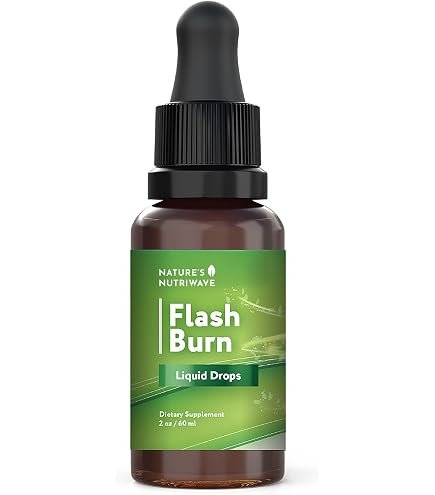
Flash Burn :Flash Burn (also marketed as FlashBurn) is a liquid dietary supplement sold in dropper form and positioned as a “sublingual” metabolic support product. The marketing promises thermogenesis, appetite suppression, and “stubborn fat” reduction, with the liquid format pitched as faster-absorbing than capsules. The standard pitch is familiar: a few drops under the tongue, no pills to swallow, no strict diet required, and results that arrive faster than anything in capsule form.
The product is sold direct-to-consumer through a network of websites, many of which present themselves as the “official” source. A defining problem must be stated upfront: Flash Burn does not have a single, consistent identity. Different sources describe materially different formulas, the individual doses of every ingredient are hidden, and trust scores across selling domains range from 1 out of 100 to 64 out of 100. These are not peripheral concerns—they determine whether the product can be evaluated at all.

What’s Known About the Ingredients (and What Isn’t)
The ingredient information for Flash Burn is fragmented in a way that prevents meaningful assessment.
Panel A — The thermogenic blend. The most commonly cited formula includes green tea extract, guarana seed, grape seed extract, African mango, maca root, raspberry ketones, L-carnitine, garcinia cambogia, and ginseng. A slightly expanded version adds capsicum (chili pepper), chromium, and L-glutamine.
Panel B — A three-ingredient formula. One review describes a completely different product: “bariatric seed (CSM), tulsi, and olive leaf extract” in a 60 mL caffeine-free drop format.
Panel C — A capsule formula. Another source describes Flash Burn as a “daily weight management capsule,” not a liquid at all.
Panel D — Additional variants. One listing includes vitamin C, B12, cordyceps, green coffee bean, bitter orange peel, and rambutan.
These panels do not overlap. A consumer cannot know what form—liquid or capsule—or which formula they are purchasing without physically inspecting the product.
The critical limitation: no individual doses are disclosed. The formulas are presented as proprietary blends. Even the most detailed breakdowns list ingredient names without milligram amounts. This makes it impossible to compare the product against the doses used in published research. One analysis notes that the marketing leans on the phrase “clinically studied ingredients”—not “clinically studied FlashBurn”—a distinction that allows the brand to sound scientific without making a testable claim.
What the ingredient-level evidence actually shows:
- Green tea extract has modest support for thermogenesis at doses typically in the 300–500 mg EGCG range.
- Guarana is a caffeine source; its thermogenic effect is essentially a caffeine effect.
- African mango has small, mixed trials, often industry-funded.
- Raspberry ketones have no credible human weight-loss evidence.
- Garcinia cambogia has been studied but results are inconsistent, and liver-safety signals exist.
- Chromium may support blood sugar, but its weight-loss effect is negligible.
No published clinical trial has tested the finished Flash Burn formula. One review concluded that the brand “promises rapid, effortless weight loss with no credible clinical evidence for the product as formulated”. Grokipedia confirms that “no independent clinical trials are widely cited to substantiate the product’s specific claims for significant fat-burning or metabolism-boosting effects”.
How Flash Burn Is Positioned to Work
The marketing describes a multi-pathway mechanism:
Natural thermogenesis — green tea and capsicum “gently raise internal core temperature,” increasing calorie expenditure at rest.
Blood sugar stabilization — chromium supports insulin sensitivity, reducing cravings and energy crashes.
Mitochondrial support — maca and ginseng support ATP production, providing “clean, sustained energy”.
Sublingual absorption — the liquid format bypasses first-pass liver metabolism, allowing “rapid cellular absorption”.
Each of these mechanisms is plausible in the abstract. Thermogenesis is real; chromium does affect insulin signaling; sublingual absorption is a legitimate pharmacological route. The problem is that plausibility is not evidence. None of these mechanisms has been demonstrated for the finished product, at the doses it delivers, in a controlled trial. One analysis put it precisely: “The brand’s materials gesture toward science. The science doesn’t gesture back”.
What Users Are Reporting
User feedback is predominantly negative, and the complaints are consistent across platforms.
Amazon listings average 2.7 out of 5 stars across approximately 27 reviews. Negative feedback cites lack of noticeable effects, no weight loss, nausea, abdominal pain, and refund concerns. Positive comments mention sustained energy or appetite control in some cases.
Trustpilot ratings vary by domain but are consistently low: 2.2 out of 5 on one profile and 2.5 out of 5 on another. Complaints focus on ineffectiveness, inconsistent product forms, misleading marketing, and poor customer service.
The most informative complaints are specific and recurring:
“DOES NOT WORK.” One reviewer wrote: “I used it for 30 days, twice a day and saw absolutely NO wt loss. I am now attempting to obtain a refund and the ‘run around’ is amazing”.
Weight gain, not loss. A JustAnswer user reported: “I started on March 4 and I have gained over 5 lbs”.
Refund obstruction. A detailed complaint described buying six bottles, receiving instructions to return them at the customer’s own cost, returning four unopened bottles—and still not receiving a refund. The reviewer stated: “The video I watched said money back guarantee and you can keep the product. That’s not true. I had to pay for the 2 bottles all I used and a $100.00 restocking fee”.
Unauthorized upsell during checkout. One reviewer reported: “Within seconds of processing the first payment while I was watching what I thought was a required video, I was given the option to purchase 6 more bottles at a huge discount”.
A separate pattern of inconsistent product forms appears in complaints—some users receive liquids, others report capsules or powders, consistent with the fragmented formula panels described earlier.
Pricing, Subscription Traps, and the Refund Reality
Pricing varies across domains and funnels. One source references a purchase price of $294** before a discount offer. Amazon third-party listings show **$44.95 for a two-pack, described as $11.24 per fluid ounce. A JustAnswer user noted the product is “available on various platforms like Amazon and Walmart for much less than half the price” compared to the official site.
The subscription issue is more consequential than the sticker price. Multiple reviews document subscription charges that were not clearly disclosed at checkout, and difficulty canceling recurring billing even after multiple attempts. One analysis states plainly: “Subscription charges that weren’t clearly disclosed at checkout” are a recurring complaint, and “some users report difficulty canceling recurring billing even after multiple attempts”.
The refund process is the single most documented failure point.
One Trustpilot reviewer described being told they could “try the product for 30 days and can then request a refund,” but would have to pay a restocking fee—or alternatively pay a 10% cancellation fee.
Another reviewer stated: “She then said she can only refund 50% until they get the product back and expects me to pay shipping”.
A third reviewer described a representative confirming a refund, followed by a different representative stating no refund could be issued.
PissedConsumer records a complaint referencing a “120 day return for full refund” and a request for $808 to be refunded to PayPal**. The company response confirmed refunds were processed for three orders totaling **$816—but only after the complaint was escalated. The gap between the advertised guarantee and the user experience is the central operational problem: the guarantee exists on paper, but exercising it requires navigating email chains, return shipping at the customer’s cost, and inconsistent support responses.
A critical caveat on the guarantee: One review notes that “a refund process that requires email chains, reference numbers, and response windows that conveniently expire” is a designed feature, not a bug—it makes the guarantee difficult to claim in practice.
Frequently Asked Questions
Is Flash Burn safe?
Safety cannot be reliably assessed because the formula varies and doses are undisclosed. Some described panels contain stimulants (guarana, green tea, bitter orange) and garcinia, which carry specific safety considerations. Consult a physician before use, especially if you have cardiovascular conditions, take medications, or are sensitive to stimulants.
Who should avoid Flash Burn?
Individuals with cardiovascular disease, uncontrolled hypertension, anxiety disorders, or those taking MAO inhibitors or blood-pressure medications should avoid or consult a physician first. Pregnant or breastfeeding individuals and anyone under 18 should not use it.
Does Flash Burn actually work?
The individual ingredients have some research behind them—green tea and guarana for thermogenesis, chromium for blood sugar. But the doses are undisclosed, the formula varies across sources, and no trial has tested the finished product. User results are polarized, with a significant share reporting no benefit at all.
How long until results are noticeable?
User reports suggest initial energy and craving improvements within 1–2 weeks, with visible fat loss emerging around weeks 4–8 when combined with diet and moderate exercise. The 60-day guarantee provides a window for evaluation.
Is there a subscription or auto-ship program?
Multiple reviews document subscription charges that were not clearly disclosed at checkout, and difficulty canceling recurring billing. Verify the terms at checkout before providing payment information.
Where should I buy Flash Burn?
Given the website fragmentation and trust scores as low as 1 out of 100, purchasing carries significant risk regardless of source. If you choose to proceed, verify the domain carefully, use a credit card with buyer protection, and retain all order documentation.
The Bottom Line
Flash Burn is a liquid supplement marketed for weight management, but it is not a single, coherent product. At least four different ingredient panels and two different delivery forms are described under the same brand name, and no individual dose is disclosed for any ingredient in any version. The marketing leans on “clinically studied ingredients” without ever claiming the finished product has been clinically studied. No published trial has tested the finished Flash Burn formula.
The operational concerns are equally significant. Refund obstruction is documented and recurring, with users reporting restocking fees, inconsistent support responses, and guarantees that do not match the advertised terms. Subscription traps are a documented pattern, with charges not clearly disclosed at checkout and difficulty canceling recurring billing. And website trust scores are as low as 1 out of 100, with flags for hidden ownership, blacklist hits, and associations with scam-associated servers.
For the small share of users who report benefit, the experience clusters around appetite control and steady energy—effects consistent with what green tea and guarana would predict at adequate doses. But without dose disclosure, without a consistent formula, and without a reliable refund process, the product cannot be recommended as a safe or rational purchase. Meaningful weight management requires dietary and activity changes, and individuals with significant weight concerns should consult a healthcare professional rather than relying on a supplement sold through a fragmented network of low-trust domains.
Important Disclaimer: This information is for informational purposes only and is not intended to diagnose, treat, cure, or prevent any disease. Statements regarding dietary supplements have not been evaluated by the U.S. Food and Drug Administration. Consult a qualified healthcare professional before using any dietary supplement or making significant changes to your diet, exercise, or wellness routine. Individual experiences may vary.