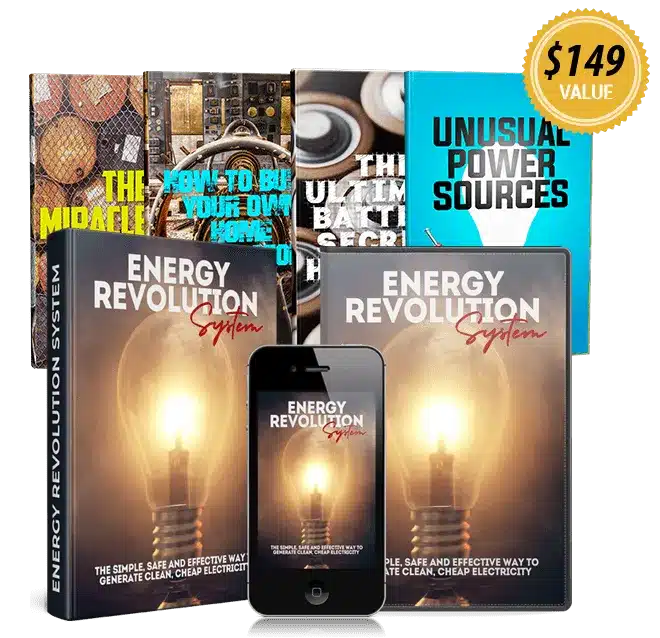
Energy Revolution System: DIY Generator Guide, Real Costs & Refund
Energy Revolution System™ is a digital DIY blueprint that teaches you how to build a small, Tesla-inspired electromagnetic generator using low-cost hardware components — positioning itself as a hands-on path to reducing grid dependency rather than a plug-and-play power solution. The guide is built around a Bifilar Pancake Coil design attributed to Nikola Tesla, combining magnets, copper wire, and basic electronics into a compact build that the creator claims can supplement household power and ease electricity costs.
✅ Digital Blueprint + Instructional Materials
✅ Tesla-Inspired Bifilar Coil Design Concept
✅ Materials Sourced from Local Hardware Stores
✅ Claimed Supplemental Power Output
✅ One-Time $39 Payment (Promotional Price)
✅ 60-Day Money-Back Guarantee via ClickBank
If you have seen advertisements promising to “slash your electric bill by up to 80%” using a forgotten Tesla secret, you have likely encountered this product. The pitch leans heavily on a narrative about Tesla’s lost work and a rediscovered “ancient” mechanism, wrapped in the language of energy independence and off-grid living. The appeal is obvious: rising utility costs, a modest entry price, and the promise of a weekend project that pays for itself.
This breakdown examines what the Energy Revolution System actually is, what the build involves, what real users report about savings and costs, and — critically — where the marketing outpaces independent verification. The product is not a supplement, a ready-made generator, or a certified energy device; it is an informational guide sold through ClickBank. Understanding that distinction is the first step to evaluating whether it fits your expectations.
1. What Is the Energy Revolution System?
The Energy Revolution System is, at its core, a digital instructional package — not a physical device delivered to your door. After purchase, buyers receive access to a downloadable blueprint, step-by-step written instructions, diagrams, and video tutorials that walk through the assembly of a small-scale generator. The entire product is sold exclusively through ClickBank, a major digital retailer for informational products, which also handles the refund process.
The build itself is described as a compact electromagnetic setup centered on a specially wound coil, often identified as a Bifilar Pancake Coil — a design attributed to Nikola Tesla’s 1894 patent (U.S. Patent No. 512,340) for a bifilar coil winding. The materials list is intentionally low-tech: high-strength magnets, copper wire of specific gauges, a small electrical source, and basic hardware components available at local electronics or hardware stores. The advertised guide price is **$39 as a one-time payment**, with a stated regular price of $149, and the seller includes bonus materials with the core package.
What the product is not matters just as much as what it is. It is not a pre-assembled or certified generator, not a traditional solar or wind system, and not a device with an independently verified patent or peer-reviewed study supporting its core performance claims. The marketing attributes the discovery to an independent inventor credited as “Michael Garnett,” though the seller’s footer confirms this is a pen name used to keep the author anonymous. That anonymity is a transparency weakness, even if it is common among ClickBank vendors.
2. How Does the Energy Revolution System Work?
The system is designed around electromagnetic induction and magnetic motion conversion. In simplified terms, the blueprint instructs the builder to arrange high-strength magnets near a wound copper coil so that the interaction between the magnetic field and the conductor produces a small electrical output. The Bifilar Pancake Coil — two wires wound in parallel — is the centerpiece, and the marketing describes it as a clever circuit configuration that maximizes the efficiency of the components rather than a source of limitless “free energy”.
The practical workflow is sequential and hands-on. The buyer studies the blueprint, sources the required components, winds the coil according to the guidance, assembles the magnetic rotor and stator arrangement, connects an output stage, and then tests and optimizes the build. One detailed buyer-style report described the process as taking approximately 19 days from preparation through deployment, with initial output coming in below expectations and optimization improving performance by roughly 18%. This is not a “plug it in and save” product; it is a project with a learning curve.
The performance claim is where the gap between marketing and verification is widest. The sales page promotes savings of 50% to 80% on electricity bills, but independent testing and third-party buyer reports document considerably more modest results. One 90-day report recorded $75 in cumulative electricity savings** after spending **$153.47 on materials, and another documented approximately **$31.20 in monthly savings** — about 17.5% against a $178 baseline bill. The 80% figure should be treated as a promotional maximum, not a guaranteed or typical outcome. A coil can transfer, store, or shape electrical energy from another source; it cannot create energy from nothing, which is where the marketing crosses into misleading territory.

3. How the Energy Revolution System Helps with Energy Costs & Self-Reliance
The benefits of the Energy Revolution System come from its educational and hands-on value, combined with the possibility of modest supplemental output. Below are the key components and considerations, presented with enlarged text for emphasis.
Bifilar Pancake Coil Design — The centerpiece of the build; a Tesla-inspired winding configuration that the guide teaches you to construct. The coil is the component most responsible for the project’s learning value, even if its output is smaller than the marketing implies.
High-Strength Magnets & Copper Wire — The core materials for electromagnetic induction. Sourcing these components is part of the project’s practical education, and costs vary depending on the build size and local supplier pricing.
Step-by-Step Blueprint & Video Tutorials — The package includes written instructions, diagrams, and visual guides for unfamiliar tasks like coil winding, making the project approachable for beginners with basic DIY patience.
Supplemental Output, Not Whole-Home Replacement — The system is positioned as a small-scale supplemental device. Real-world reports describe modest savings over testing periods, not the elimination of a household bill. Reviewers explicitly warn: “It’s not a whole-home generator”.
Materials Cost of Roughly $50–$200 — The guide itself costs $39, but the **full project budget** includes components. One builder spent **$153.47** on materials, another documented $68.42**, and the sales page estimates a range of **$50 to $200 depending on build size.
Emergency Preparedness Angle — Some users are drawn to the project for backup power interest and off-grid learning rather than pure bill reduction. The system’s value in this context is educational and experimental, not a certified emergency power solution.
The system is best evaluated as a low-cost DIY learning project with a possible supplemental-power experiment — not as a magic device that eliminates a household electricity bill. Buyers who approach it with that expectation are more likely to find the experience worthwhile.
4. Energy Revolution System Frequently Asked Questions
Will I be charged any additional fees?
The guide is advertised as a one-time $39 payment** through ClickBank, but the **real additional cost is the materials and tools** required for the build. One buyer reported spending **$153.47 on components, another documented $68.42**, and the sales page itself estimates **$50–$200 depending on build size. Checkout may also present optional one-time offers (OTOs) or upgraded packages immediately after purchase; these are separate purchases, not required fees, and reviewers advise reading each offer carefully before accepting.
How safe is the Energy Revolution System?
The product is an informational guide, not an electrical device that carries a safety certification. The build involves magnets, coils, wiring, and a small electrical source, and the guide is intended for users with basic DIY aptitude. Reviewers consistently emphasize that electrical construction requires appropriate caution, and anyone unfamiliar with electrical assembly should consider having a qualified person review the setup before powering it on. The websites selling the product have received low trust scores from scam-advisory services due to hidden owner identities and limited site history, which is a separate reputational caution worth noting.
Can I use it alongside solar or a home battery?
The system is described as a supplemental experiment, not a grid-tied or certified complementary system. It is not designed to integrate with solar inverters, home batteries, or utility interconnection in a code-compliant way. Treat it as a standalone learning project, not as part of a permitted home energy installation. Reviewers explicitly warn it is “not intended to replace conventional whole-home power systems”.
How long does it take to see results?
The build itself is a project — one detailed report described approximately 19 days from preparation to deployment, while promotional materials suggest some units can be assembled in under 6 hours once materials are on hand. Savings, where reported, accumulate gradually: one 90-day test recorded $153.47 in materials costs** with **$75 in cumulative savings, and reviewers note that results vary substantially based on electricity rates, household consumption, and build quality. This is not an instant-return product.
What is the recommended skill level?
The guide is written for non-engineers, but it requires patience and basic DIY aptitude. Coil winding and component assembly are the most demanding steps. One reviewer who purchased the product stated they were “still not able to understand what it is that I’m supposed to build” after months of reading, while others report completing the build successfully. Users who enjoy hands-on projects and are comfortable learning from diagrams will find the process more manageable than those expecting a plug-and-play solution.
Is the Energy Revolution System a “free energy” device?
No. The marketing uses Tesla-inspired language and dramatic savings claims, but the product functions as a small electromagnetic generator project with reported output well below whole-home scale. The “free energy” framing is promotional narrative, not an engineering description, and independent peer-reviewed support for the core performance claim is absent. One analysis states plainly: “the Tesla connection may make the project more interesting, but it should not be the reason you assume the system will eliminate your electricity bill”.
Where can I buy the Energy Revolution System?
It is sold exclusively through ClickBank via the official sales page, not in retail stores or third-party marketplaces. Purchase only through the official presentation to ensure eligibility for the refund policy. Avoid resellers, because ClickBank’s refund protection applies only to transactions it processed.
Does it require special tools?
The materials list focuses on basic hardware and electronics components, but some steps — particularly coil winding — may benefit from simple tools you may already own or can source inexpensively. The guide’s instructional materials are intended to reduce the tool barrier for beginners.
Is there a money-back guarantee?
Yes. The purchase is covered by a 60-day ClickBank money-back guarantee, which is a genuine risk-reduction mechanism. See the guarantee section below for how to use it.
5. Benefits of the Energy Revolution System
The Energy Revolution System is best framed as a practical DIY learning package with a possible supplemental-power experiment attached — not as a certified energy product or a guaranteed bill eliminator. Its value comes from the educational experience of building an electromagnetic device, the low entry price of the guide, and the ClickBank refund window that lets buyers assess the package with limited financial exposure. Below are ten commonly cited benefits and practical advantages.
- Low entry price at $39 for the digital guide, with a stated regular price of $149.
- Step-by-step blueprints and instructional materials make the build approachable for beginners.
- Tesla-inspired coil design offers genuine hands-on learning about electromagnetic induction.
- Materials are commonly available at local hardware and electronics stores.
- Potential for modest supplemental output, with reported savings varying by build and household.
- Encourages energy awareness by making household power use more tangible.
- Appeals to DIY and preparedness interests for users who enjoy practical projects.
- One-time payment structure with no subscription requirement.
- 60-day ClickBank money-back guarantee provides a genuine refund pathway.
- Low-risk entry point for anyone curious about the concept without committing to a full installation.
6. Does the Energy Revolution System Have a Money-Back Guarantee?
Yes. The Energy Revolution System is sold through ClickBank and carries the platform’s standard 60-day money-back guarantee. This is the most concrete consumer protection attached to the purchase. Because ClickBank processes the transaction, you can request a refund directly through ClickBank using your order number and the email address used at checkout — you do not have to rely solely on vendor support, which is often email-based with a 24–48 hour response window.
Two practical notes are worth keeping in mind. First, the guarantee covers the guide purchase, not the money you spend on materials — component costs are not refundable through this policy. Second, keep your order number and purchase email accessible from the moment you buy, because those are the identifiers ClickBank uses to locate and process a refund request. Reviewers advise tracking the deadline and requesting any refund well before day 60. The refund process is reliable but not instant, typically taking a few days after approval.
7. Real User Experiences with the Energy Revolution System
User 1 — “A Project With Modest Returns”
I went in expecting a learning experience rather than a bill killer, and that is exactly what I got.
The blueprints were clear enough to follow, and the video on coil winding was genuinely helpful.
I spent around $140 on materials and tracked my output for about two months — the savings were modest, nowhere near the 80% claim.
It took me closer to three weekends than a single afternoon, but the project itself was satisfying.
If you enjoy building things and want to understand magnetic induction, it is worth the $39 — but if you expect to eliminate your power bill, you will be disappointed.
User 2 — “Clear Instructions, Real Costs Beyond the Guide”
The guide is well organized and the diagrams are easier to follow than most DIY PDFs I have bought.
The materials list was accurate, but the costs added up more than I anticipated — around $150 by the time I had everything.
I appreciated that the videos showed the coil winding step in real time, because that was the part I was most nervous about.
My output was smaller than the sales page suggested, but the build worked and I learned a lot.
The 60-day refund window made it feel like a low-risk experiment, even though I ended up keeping it.
User 3 — “Not What the Ads Imply, But Not Useless”
The advertising oversells the savings dramatically — I have not seen anything close to 80%, and I doubt most buyers will.
That said, the product is a real guide and the build is real.
I spent about $125 on parts and got a small supplemental output that shaved a little off my bill over time.
The most valuable part for me was the education — I understand the Tesla coil concept much better now than I did before.
My advice: buy it as a project, not as a financial solution — if you are patient and handy, it is an interesting build.
User 4 — “Frustrating for a Beginner”
I purchased the digital product hoping to build something that would help with my electricity costs.
What I received felt more like general tips on using less power — turning things off, using the grid more wisely — than a clear blueprint for a machine.
I am months into reading and staring at the information, and I am still not sure what exactly I am supposed to build.
The claim that anyone can build it in one afternoon did not match my experience at all.
I would love to talk to someone who has actually built a working unit, because the sales page says thousands have, but I could not find one.