FemiCore: The Women’s Bladder Support Supplement – A 2026 Reality Check
What Is FemiCore?
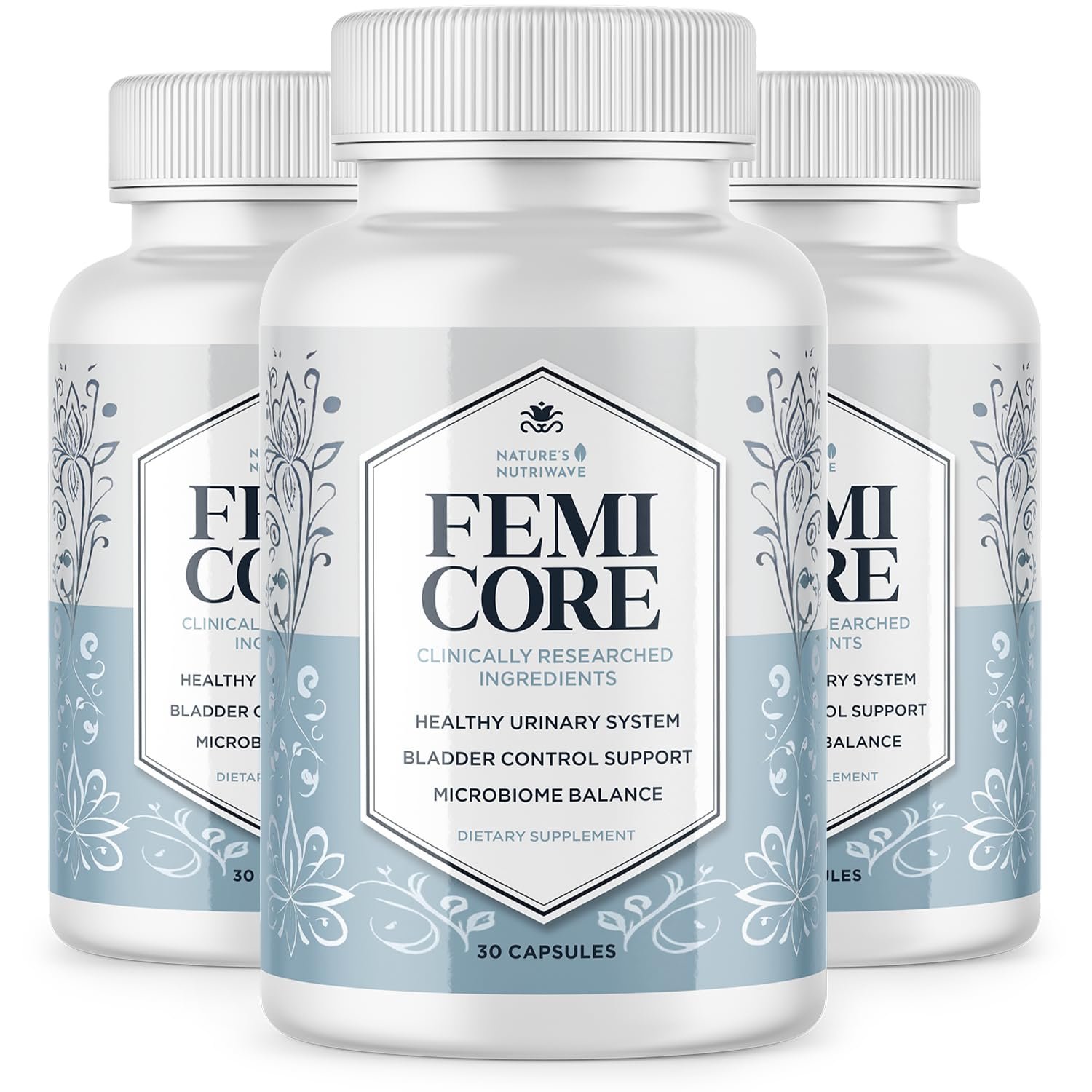
FemiCore is a once-daily capsule supplement marketed for women experiencing bladder urgency, frequent urination, and urinary discomfort. Each bottle contains 30 capsules—a 30-day supply—and the product is sold direct-to-consumer through third-party checkout platforms, with ClickBank named as the retailer on current seller pages.
The formula combines a 350 mg herbal blend with a 50 mg probiotic blend, totaling nine named ingredients. The label itself is unusually transparent about which ingredients are included, though not about how much of each one is present.
A critical structural issue must be addressed upfront: FemiCore is sold through a fragmented network of domains claiming to be the “official” source, with independent trust scores ranging from 17 out of 100 to 46 out of 100 depending on which domain is examined. The manufacturer has also issued warnings about unauthorized sellers, stating that the 60-day guarantee applies exclusively to purchases made through the official website. This fragmentation is a defining factor in evaluating the product’s legitimacy.
What’s Known About the Ingredients
FemiCore discloses the names of all nine active ingredients—a point in its favor compared to many direct-sold competitors. What it does not disclose is the individual amount of any botanical or probiotic strain. The label lists only two blend totals: 350 mg for the herbal blend and 50 mg for the probiotic blend.
The herbal blend contains:
Cranberry Extract (standardized to 30% proanthocyanidins) is the most evidence-backed ingredient in the formula. A 2023 Cochrane review found cranberry products can reduce symptomatic UTIs in some groups, particularly women with recurrent infections. However, this benefit relates to infection prevention—not bladder urgency or leakage.
Bearberry (Uva Ursi) contains arbutin, which converts to a compound with antibacterial activity in urine. Traditional herbal practice limits uva ursi to short periods—typically 1–2 weeks—due to potential liver effects with prolonged exposure. A daily, months-long formula containing bearberry is a significant safety consideration.
Berberine HCl (8%) is a plant alkaloid with antimicrobial activity in lab settings. It can lower blood sugar and interact with some medications, including cyclosporine, diabetes medication, and warfarin.
Mimosa Pudica Seed Extract is used in traditional South Asian medicine. Laboratory and animal studies suggest effects on smooth muscle and inflammation, but human research is limited.
The probiotic blend contains five Lactobacillus strains: L. crispatus LCr86, L. acidophilus LA88, L. plantarum N13, L. gasseri LG08, and L. casei LC16.
The critical gap: no CFU count is disclosed. Without knowing how many live bacteria are present per serving—or whether they remain viable at expiration—it is impossible to assess whether the probiotic component can meaningfully colonize the urinary tract or compare it to studied doses. One review noted that probiotic studies use defined CFU counts, and “optimally dosed” is a claim, not a specification.
A further inconsistency: While FemiCore’s label names nine ingredients, some public pages have described a different formula entirely—one review found the product is essentially the same formula as a competitor called FemiPro, sold by the same Ohio distributor. Consumers should verify the physical bottle label against the current disclosed formula.
How FemiCore Is Positioned to Work
FemiCore’s sales narrative centers on the urinary microbiome and, more specifically, on a “dioxin” story. The seller’s FAQ claims the formula targets “toxic dioxins that can throw your urinary microbiome out of balance,” and that its compounds “help prevent bladder leaks by repopulating your urinary microbiome with good bacteria”.
The evidence gap between this narrative and the research is substantial.
The seller cites approximately two dozen references. These are studies of individual ingredients and of urinary bacteria in women—not a clinical trial of the finished FemiCore capsule. One independent review found no qualifying published human trial of the current FemiCore formula. Another concluded: “The reviewers found no independent testing of the finished product to cite, no ingredient amounts in the information they examined, and no verified star rating”.
Most importantly, the “dioxin” framing is not supported by the research cited. The studies referenced compare urinary bacteria in women with and without certain symptoms; they do not establish that dioxins are a cause of bladder leakage, nor that any supplement ingredient removes them.
One review put it plainly: FemiCore is “a sensible recurrent-UTI formula sold with a bladder-control story the ingredients cannot deliver”.
What Users Are Reporting
Filtering out promotional content, user feedback reveals a pattern of modest, gradual effects for some women and no benefit for others.
Common positives reported:
- Fewer urinary discomfort episodes and a calmer bladder after a month or two
- Fewer UTI recurrences, which several reviewers describe as meaningful
- More confidence leaving the house without scouting bathrooms first
Common complaints:
- “I felt nothing after two months” — a substantial share, concentrated among women with stress-type leaks (the mechanical kind caused by coughing, sneezing, or lifting). The formula contains no ingredient that acts on pelvic-floor muscle, so this outcome is expected.
- Digestive adjustment in the first weeks, typical of probiotic starts.
- Results not matching marketing expectations — one review notes that the most disappointed users are those who expected a fast, dramatic outcome.
Important limitation on review counts: The sales page displays a figure like “19,263 reviews.” This is the seller’s own count, not a verified third-party aggregation. Independent, verifiable review data for FemiCore is limited.
Pricing and Packages
FemiCore is available in tiered packages. Prices as of October 2026:
| Package | Supply | Total | Per Bottle | Shipping |
|---|---|---|---|---|
| 2 Bottles | 60 days | $158 | $79 | $9.99 |
| 3 Bottles (2+1) | 90 days | $207 | $69 | Free US shipping |
| 6 Bottles (3+3) | 180 days | $294 | $49 | Free US shipping |
The 6-bottle package includes three digital bonus guides. These are unrelated to bladder health, and their “retail values” should be treated as marketing framing rather than real savings.
Critical caveat: The smallest package is two bottles. There is no single-bottle trial option. Consumers must commit $158 plus shipping to test the product.
60-Day Money-Back Guarantee: The Procedural Reality
FemiCore advertises a 60-day money-back guarantee, but the mechanics matter as much as the promise.
The clock starts on delivery, not on your order date. The window runs for 60 days from the date the product arrives. Nobody sends a reminder when it is closing—the practical risk is that the guarantee quietly expires while you are still deciding whether the product is doing anything.
The process requires returning all bottles at your own cost. According to the stated terms, you must mail back every bottle—empty or not—and the seller does not cover return shipping.
ClickBank provides a backstop. FemiCore is sold through ClickBank, which runs its own 60-day self-service refund system separate from the seller’s promise. You can request a refund through ClickBank’s order lookup using your order number, zip code, or the last four digits of the card you paid with. This gives the guarantee a real enforcement mechanism beyond the seller’s goodwill.
The timing trap: The seller’s marketing suggests giving the product time, but the guarantee is only 60 days. Consumers should set a calendar reminder for day 45 to decide whether to keep or return.

Key Limitations and Considerations
Proprietary blend hides individual doses. The 350 mg herbal blend and 50 mg probiotic blend totals do not reveal how much of each ingredient is present. It is impossible to compare against studied doses.
No probiotic CFU count. The live bacteria count is not disclosed, making it impossible to assess viability or compare to clinical research.
No product-specific clinical trials. The evidence supports individual ingredients in specific contexts—primarily cranberry for recurrent UTI prevention—not the finished FemiCore formula for bladder control.
The “bladder control” promise outruns the evidence. The formula contains no ingredient that acts on pelvic-floor muscle. It will not fix stress leaks (coughing, sneezing, lifting), which are the most common source of disappointment.
Bearberry in a long-term daily formula. Traditional guidance limits uva ursi to 1–2 weeks. A months-long daily product containing bearberry warrants a conversation with a doctor, particularly for anyone with liver history.
Pregnancy and nursing. Not appropriate—bearberry and berberine are both contraindicated.
Website fragmentation. Multiple nearly identical FemiCore websites exist with trust scores ranging from 17 to 46, and the manufacturer warns about unauthorized sellers.
Not a substitute for medical care. Bladder leaks accompany diabetes, neurological conditions, prolapse, and interstitial cystitis. Blood in urine, pain, fever, or new leaks always warrant a doctor’s visit before any supplement.
Frequently Asked Questions
Is FemiCore safe?
Generally well-tolerated, but bearberry’s presence in a daily long-term formula is a concern. Pregnant or nursing women should not use it. Consult a healthcare professional before use, especially if you have liver concerns or take medications.
Who should avoid FemiCore?
Pregnant or breastfeeding individuals, those under 18, individuals with liver or kidney concerns, and anyone taking cyclosporine, diabetes medication, or warfarin should consult a physician first.
Does FemiCore actually work for bladder control?
For urgency and irritation, some users report gradual improvement. For stress leaks (coughing, sneezing, lifting), it will not help—this is the most common source of disappointment.
How long until results are noticeable?
User feedback suggests 1–2 months for urinary comfort changes. Judge the product with a bladder diary and set a reminder for day 45 of the guarantee window.
Is there a subscription or auto-ship program?
The manufacturer states it is a one-time purchase with no autoship enrollment. Verify this at checkout.
Where should I buy FemiCore?
Only from a verified official domain. The manufacturer warns that the guarantee applies exclusively to purchases through the official website. Avoid domains with trust scores in the low double digits or below.
The Bottom Line
FemiCore is built around a legitimate research area—the urinary microbiome—and includes cranberry, a well-studied ingredient for recurrent UTI prevention. The label discloses the names of all nine active ingredients, which is more than many direct-sold competitors offer, and the once-daily capsule is easy to maintain.
However, the product’s core promise outruns its evidence. The “bladder control” claim is not supported by trials of the finished product. The probiotic blend has no CFU count disclosed. Bearberry appears in a long-term daily formula despite traditional limits on duration. The “dioxin” narrative is not supported by the research the seller cites. And the website fragmentation—with trust scores ranging from 17 to 46 across different domains—creates real purchasing risk.
For women whose primary complaint is recurring urgency and irritation, who have been medically evaluated and cleared, and who are willing to commit to the two-bottle minimum with a bladder diary and a day-45 calendar reminder, FemiCore may be worth a cautious trial. For stress incontinence, or for anyone who needs to know what a probiotic actually contains, the product does not answer the question. Pelvic floor physical therapy has dramatically more evidence behind it and is the first-line recommendation of every urogynecology guideline.
Important Disclaimer: This information is for informational purposes only and is not intended to diagnose, treat, cure, or prevent any disease. Statements regarding dietary supplements have not been evaluated by the U.S. Food and Drug Administration. Consult a qualified healthcare professional before using any dietary supplement or making significant changes to your diet, exercise, or wellness routine. Individual experiences may vary.