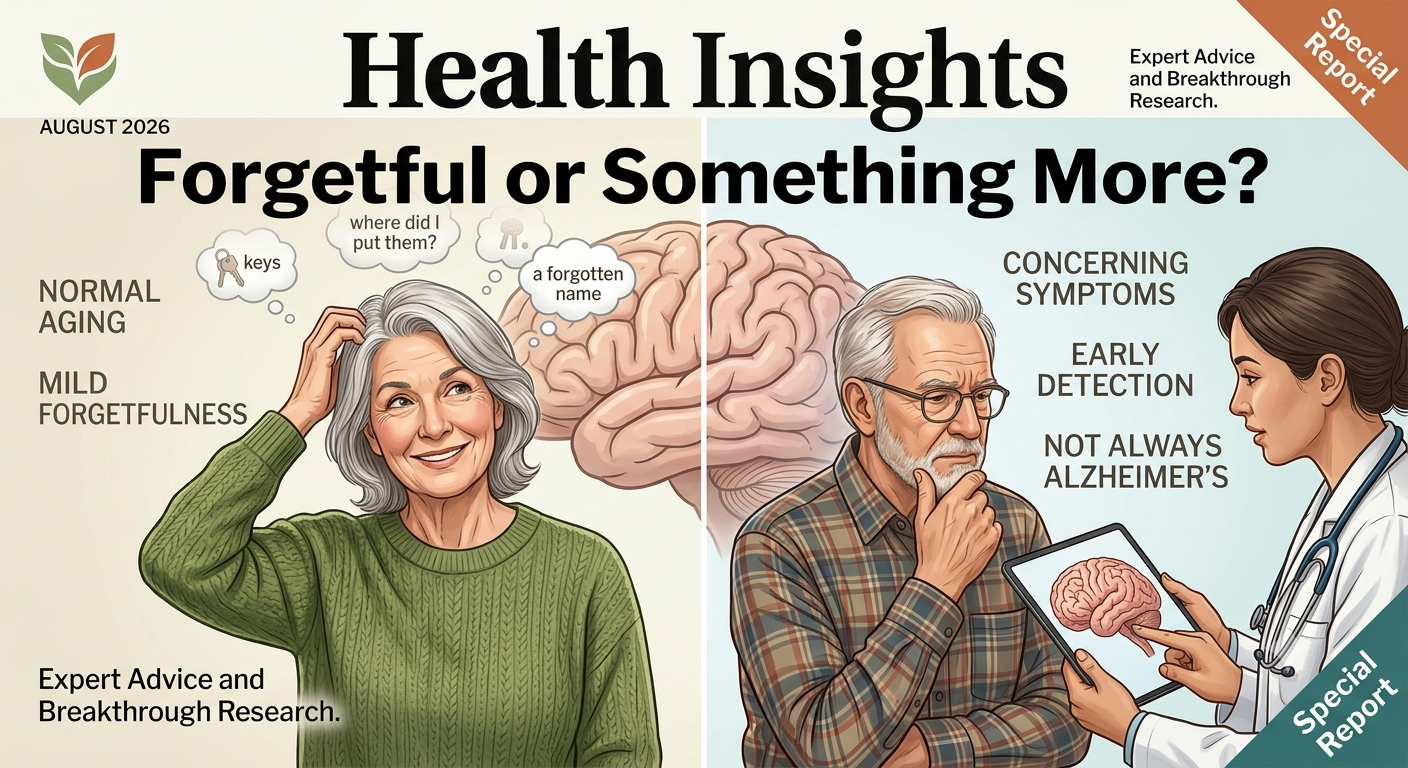
Forgetful or Something More? Memory Loss Myths Debunked (August 2026)
By Dr. Jeff MD
August 2, 2026
Forgetful or Something More? Memory Loss Myths Debunked :Let me start with something that might surprise you: forgetting where you put your keys is usually not a sign of dementia.
I’ve spent years studying brain health and cognitive function, and I’ve seen how fear and misinformation can cause unnecessary panic. Every day, people in their 40s, 50s, and beyond worry that normal forgetfulness signals something much worse. They’re stressed, ashamed, and afraid to talk about it.
But here’s the truth: most memory lapses are perfectly normal. And the myths we believe about memory loss often cause more harm than the memory changes themselves.
Let me walk you through what I’ve learned and separate fact from fiction.
The Fear We All Share
I’ve spoken with countless people who worry about their memory. They’ll confess things like, “I’m always forgetting names,” or “If I don’t write things down, I’ll forget to do them,” or “I walk into a room and can’t remember why I’m there.”
These people are panicked and afraid and deeply ashamed of these moments of forgetting—which are actually totally normal .
Here’s the reality: our brains are not designed to remember everything we encounter . Human memory is amazing, and it’s fallible. Even memory champions—people who memorize pi to over 111,000 digits—still forget their wife’s birthday .
The question isn’t whether you forget things. The question is: does your forgetting interfere with your ability to live your life?
Myth 1: “Memory Loss Is a Normal Part of Aging”
The Reality: With age, it’s normal to notice some cognitive changes. It may take a little longer to remember a name, concentrate, or retrieve certain information. This slowing is part of normal aging .
But this, by itself, is not dementia.
The key difference is that, in dementia, the changes are progressive, interfere with daily activities, and affect a person’s autonomy .
Consider this example:
- Forgetting where you left your keys can be normal.
- Forgetting what your keys are for or how to use them is not .
When forgetfulness stops being occasional and starts to interfere with day-to-day organization, the management of routine tasks, or the recall of recent events, it’s time to consult a professional .
Myth: “Mild cognitive impairment is just normal aging.”
Reality: Mild cognitive impairment (MCI) is different from normal, age-related forgetfulness. People with MCI experience more memory and cognitive problems than expected for their age . If you or people around you notice you’re more forgetful than usual, it’s worth talking to a doctor.
Myth 2: “Dementia and Alzheimer’s Are the Same Thing”
The Reality: We often use “Alzheimer’s” as a synonym for dementia, but they are not exactly the same.
Dementia is a clinical syndrome—a set of symptoms resulting from the impairment of several cognitive functions that affects daily life. Alzheimer’s disease is the most common cause, but it’s not the only one .
Other causes of dementia include:
Each type can present differently. In some cases, memory impairment is the main issue. In others, language, behavior, attention, or planning abilities are more affected .
Understanding the type of dementia helps doctors tailor support more appropriately.
Myth 3: “If You Remember Things from the Past, You Can’t Have Dementia”
The Reality: This is one of the most common and confusing beliefs.
Recent memory and remote memory don’t work the same way. In many dementias, recent memory is the most affected, while older memories may be preserved for a longer time .
This is why you often hear: “They remember everything from their youth. The problem is with recent things.”
A person may clearly remember experiences from years ago and, at the same time, have difficulty remembering:
- What they had for breakfast
- A recent conversation
- A medical appointment
- An activity from the previous day
Memory is not a single function. It’s made up of different systems, and not all are affected at the same time or with the same intensity .
Myth 4: “Mild Cognitive Impairment Always Leads to Dementia”
The Reality: Even though MCI can increase your risk of dementia, it’s not a guarantee .
Research suggests about 15% of people age 65 or older with MCI develop dementia within a year. The rest stay stable, or their symptoms improve .
In fact, about 20% of people with MCI return to normal cognition without treatment, depending on the underlying cause of symptoms .
Multiple factors can cause MCI-like symptoms:
- Vitamin, mineral, or hormone deficiencies
- Low blood pressure
- Medications that cause sleepiness or confusion
- Regular alcohol use
- Sleep disorders like insomnia or sleep apnea
- Stress, anxiety, or depression
- Vision or hearing loss
Myth 5: “After Diagnosis, There’s Nothing Left to Do”
The Reality: This is one of the most emotionally damaging myths.
Although for many dementias we don’t yet have a cure, there is a great deal that can be done to improve quality of life and well-being .
Early diagnosis allows people to:
- Plan decisions more calmly
- Adjust roles and expectations
- Prevent risks
- Access health and social care resources
- Start non-pharmacological interventions
- Consider participation in clinical trials
Common interventions include tailored cognitive stimulation, structured schedules and routines, creating predictable and safe environments, emotional support, and managing vascular risk factors .
Providing good support is also a form of treatment. The way we are present, the quality of the relationship, and the calm with which the process is experienced have a real impact on everyday life .
Myth 6: “Only Older Adults Get Dementia”
The Reality: Although the majority of people with Alzheimer’s are 65 or older, people in their 30s to 50s can develop early-onset Alzheimer’s disease .
Mild cognitive impairment can also occur at any age . This is why it’s important to discuss persistent memory or thinking problems with your doctor, even if you’re considered “too young” to have them.
Myth 7: “There’s Nothing You Can Do to Reduce Your Risk”
The Reality: There are several lifestyle choices you can make to support brain health :
- Exercise regularly—physical activity benefits brain health
- Eat a healthy diet—nutrition plays a key role
- Stay socially engaged—connection matters
- Keep mentally active—challenge your brain
- Manage chronic medical conditions—control what you can
Research suggests these lifestyle changes, along with managing chronic conditions, can slow the progression of cognitive decline .
A Deeper Look: What Actually Causes Memory Problems?
Understanding the underlying mechanisms can help us appreciate why some supplements might support cognitive health.
One key player in brain function is tetrahydrobiopterin (BH4) . This compound is essential for the brain to produce neurotransmitters like dopamine and serotonin .
When BH4 levels are insufficient, the brain struggles to function properly. People may experience:
- Declining memory (both short-term and long-term)
- Learning difficulties
- Difficulty concentrating or “brain fog”
- Difficulty switching between tasks
- Reduced ability to handle stress
- Low mood
Serotonin, dopamine, and norepinephrine play important roles in brain areas essential for forming memories, attention, and decision-making :
- Dopamine is involved in working memory, motivation, and reinforcement of learning
- Norepinephrine supports alertness and the encoding of memories
- Serotonin influences emotional memory and mood
Low levels of these neurotransmitters are seen in individuals with mild cognitive impairment or early dementia, associated with poorer memory and greater loss of brain tissue .
BH4 also supports the production of nitric oxide (NO), which helps blood vessels dilate and allows for better blood flow to the brain. Good blood flow is vital for delivering oxygen and nutrients to brain cells during learning and memory recall .
A Possible Solution: Supporting Brain Health Naturally
Given what we know about the importance of neurotransmitter support and brain circulation, some supplements aim to support these natural processes.
Harmo Brain is one such product that has gained attention as a cognitive enhancement supplement designed to support memory, focus, and overall brain health .
The concept behind Harmo Brain is that your brain, like any other part of your body, needs the right support to function at its best. Unlike many brain supplements that rely on harsh stimulants or unproven compounds, Harmo Brain takes a more balanced approach to cognitive support.
Research suggests that compounds similar to those in Harmo Brain’s formulation may have anti-anxiety effects and support healthy brainwave patterns .
Stress can suppress beta brainwave activity, leading to confusion, lack of concentration, and mental fatigue . Products designed to support brain function aim to help maintain healthy brainwave patterns, keeping you sharp and focused even under pressure.
What to Look for in a Brain Health Supplement
If you’re considering a supplement to support cognitive health, here’s what to consider:
1. Look for science-backed ingredients: The formulation should be based on clinically studied compounds.
2. Check for transparency: Legitimate companies provide clear ingredient information that can be independently verified.
3. Be patient: The best improvements come with consistent use over time. Sustainable cognitive improvement takes time .
4. Combine with healthy habits: Supplements work best when paired with good nutrition, exercise, and sleep .
5. Consult a healthcare professional: Before starting any supplement, talk to your doctor—especially if you’re on medication or have pre-existing conditions.

When to Seek Professional Help
It’s advisable to seek professional guidance when you notice :
- Memory changes that progress over time
- Difficulties organizing or carrying out routine tasks
- Disorientation in time or space
- Changes in behavior or personality that are noticeable
Seeking advice does not mean confirming a diagnosis—it means gaining a better understanding of what is happening .
Each person experiences memory changes differently. No two courses are the same. When in doubt, asking for guidance can ease uncertainty and open the door to support .
Final Thoughts
Memory loss is a concern that touches nearly everyone as they age. But fear and misinformation often make it worse.
The truth is that most memory lapses are normal. The myths we believe about memory loss often cause more anxiety than the changes themselves.
If you’re concerned about your cognitive health, there are steps you can take:
- Talk to your doctor—early evaluation can provide answers and options
- Adopt brain-healthy habits—exercise, nutrition, sleep, and social engagement all matter
- Consider science-backed support—some supplements may help support cognitive function
- Don’t panic—many memory issues are treatable or manageable
Your brain health matters. It deserves attention, care, and the best support available.
Disclaimer: I am not a medical professional. This article is for informational purposes only and does not constitute medical advice. Always consult a healthcare professional before starting any supplement—especially if you are on medication or have pre-existing health conditions. If you believe you or a loved one may have a cognitive issue, please seek professional medical evaluation.