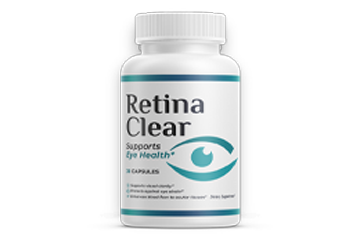
RetinaClear Review — 21 Ingredients, 7 Doses, and a Blend That Hides the Rest (November 2026)
RetinaClear Review :Disclosure: This article may contain affiliate links. If you purchase through these links, the publisher may receive compensation at no extra cost to you. This is not medical advice. Statements about dietary supplements have not been evaluated by the FDA. Consult a healthcare professional before starting any supplement.
Overview
RetinaClear is a once-daily capsule marketed for retinal health, visual clarity, and age-related eye changes, including macular degeneration support. Each bottle holds 30 capsules — a 30-day supply — and the labeled serving is one capsule daily.
The label is long and specific in one half, and opaque in the other. It lists 7 vitamins and minerals with exact printed doses — vitamin A, C, E, zinc, selenium, copper, and chromium — plus 14 botanicals and compounds folded into a single undisclosed 351 mg proprietary blend: taurine, ginkgo biloba, eyebright, grape seed extract, coleus forskohlii, alpha-lipoic acid, rutin, quercetin, bilberry, saffron, lycopene, lutein, zeaxanthin, and astaxanthin.
That structure is the central buying consideration. The two ingredients with the strongest eye-health evidence — lutein and zeaxanthin — are inside the blend, which means their individual amounts are not published and cannot be compared to the research that makes them worth taking.
What’s in It
What’s disclosed: 7 individual doses and the names of all 21 ingredients.
What’s not disclosed: the amount of any of the 14 blend ingredients, allergen information beyond a general caution, and third-party testing documentation. One independent review notes the manufacturer’s landing page does not prominently display the Supplement Facts panel and provides “insufficient ingredient transparency, dose verification, or clinical evidence”.

How It’s Positioned to Work
The marketing leans on the AREDS2 story — the National Eye Institute-funded study that established lutein, zeaxanthin, zinc, and copper as supporting macular health in people with intermediate AMD. The pitch is that RetinaClear delivers those nutrients in a convenient daily capsule.
Where the logic is genuinely supportive: the ingredients in the disclosed half of the label — vitamins C and E, zinc, copper — are standard, evidence-backed inclusions in eye formulas. Lutein and zeaxanthin are legitimate macular carotenoids with real research behind them.
Where the logic breaks:
1. The AREDS2 comparison does not transfer. RetinaClear is not AREDS2. It uses beta-carotene as its vitamin A source — the ingredient AREDS2 deliberately removed over the smoker lung-cancer signal — and its lutein and zeaxanthin doses are unpublished, so they cannot be compared to the 10 mg / 2 mg used in the trial.
2. The blend hides the ingredients that matter. Fourteen ingredients share 351 mg, so even an even split would give each about 25 mg — far below the doses used in most carotenoid and botanical research.
3. No finished-product trial exists. One independent review states plainly that the product “has never undergone independent clinical trials as a finished product”.
4. Cardiac patients have a specific reason for caution. A cardiovascular-focused review notes that bilberry, ginkgo, and various botanical extracts carry known drug interaction profiles relevant to people on warfarin, DOACs, or beta-blockers — and that without disclosed doses, cardiac patients cannot assess their own interaction risk.
What It May Be Good For
A convenient daily multivitamin-mineral base. The seven disclosed micronutrients are not trivial, and a single capsule covering them is easy to maintain.
A reasonable format for people who want a lutein/zeaxanthin product in capsule form. The carotenoids are present — the question is how much, which the label does not answer.
A 180-day guarantee on paper. The brand states a 180-day money-back guarantee including empty bottles, which is unusually generous if honored.
A brand that has publicly acknowledged counterfeit problems. In October 2026, the company reported that 60.6% of its July–September support cases involved products bought from unauthorized sellers, identified 540 unauthorized online listings, and reminded buyers that the product is sold only through its official website. That is a legitimate consumer-protection step, even if it also illustrates how polluted the market for this product is.
What to Keep Expectations Realistic About
Vision restoration. No supplement restores lost vision, reverses cataracts, treats glaucoma, or eliminates the need for glasses. The marketing’s “restoring vision clarity” language is not supported by any trial of this formula.
The AREDS2 equivalent. This is not AREDS2. Different vitamin A source, undisclosed carotenoid doses, and fourteen ingredients that are not in AREDS2 at all.
Individual blend doses. Fourteen ingredients are hidden inside 351 mg.
The 180-day guarantee. Trustpilot reviewers describe the trial period starting on the order date rather than delivery, refunds limited to unopened bottles, and repeated requests being met with silence or a “spam folder” excuse. One reviewer summarised: “After 5 requests for either a refund or an explanation, they just ghosted me”.
The rating claims. The brand’s own materials contain two contradictory figures — 4.8 stars from 35,000+ reviews and 4.91 stars from 79,200+ reviews. Independent Trustpilot shows 1.9/5 (“Poor”).
A clean domain landscape. A security scan of one RetinaClear-branded domain returned a trust score of 12/100, classified as a “suspicious shop” with typical complaints of “charge without delivery, different product, or much inferior quality”. Another variant scored 10/100.
Ingredient consistency. One independent reviewer reports multiple customers saying the actual ingredients in the product they received did not match what was described in the promotional materials or label descriptions.
Beta-carotene safety. If you smoke or quit recently, talk to a doctor before taking this product — the brand’s own FAQ says so, and the CARET/ATBC evidence is the reason.
Who It Suits
- Adults over 40 who want a convenient eye-health multivitamin and will read the label rather than the sales page
- People who want lutein and zeaxanthin in capsule form and accept that the doses are unpublished
- Buyers who will buy only through the official website — the company itself says third-party listings cannot be traced to its order records
- Anyone willing to run a personal trial and document the refund process from day one, given the complaint record
- People who are not smokers and not on cardiac medication without medical clearance
Who Should Skip It
- Smokers and recent former smokers — the beta-carotene content carries a documented lung-cancer risk signal, and the brand’s own FAQ warns this group to consult a doctor first
- Anyone on warfarin, DOACs, or beta-blockers without cardiologist review — ginkgo and other botanicals carry interaction potential, and the undisclosed doses make the risk unassessable
- People who need published carotenoid doses — lutein and zeaxanthin are inside the blend, so you cannot check them against AREDS2
- Anyone with diagnosed macular degeneration who has been advised to take a specific AREDS2 formula — this is not a substitute
- Pregnant or nursing women, and anyone under 18, without medical clearance
- Shoppers who cannot verify the checkout domain — trust scores of 10/100 and 12/100, and 540 unauthorized listings, make domain verification essential
- Anyone expecting the 180-day guarantee to be frictionless — the complaint record suggests otherwise
Practical Buying Notes
- Confirm the price tier at checkout. The disclosed ladder is $78.99 for one bottle ($69 + $9.99 shipping)**, **$177 for three ($59/bottle, free shipping)**, and **$294 for six ($49/bottle, free shipping)**. The **”$99 regular price” is an anchor, not a verified former selling price.
- Read the refund terms before paying. The 180-day window is stated, but reviewers report the trial period starting on the order date rather than delivery, refunds limited to unopened bottles, and return shipping paid by the buyer. Screenshot the terms at checkout.
- Buy only through the official website. The company says it does not sell through third-party sellers, resellers, or marketplace stores, and products bought elsewhere cannot be traced to its order records. That is both a counterfeit warning and a refund warning.
- Check the domain character by character. Third-party scores include 12/100 and 10/100 on look-alike domains, with “suspicious shop” classifications.
- If you smoke, talk to a doctor first. The beta-carotene caution is on the brand’s own FAQ, and it is not a formality.
- Photograph the bottle label on arrival and compare it with the 21-ingredient panel described here — especially if you bought anywhere other than the official site.
Bottom Line
RetinaClear is a real eye-health capsule with a long ingredient list, a short list of disclosed doses, and a marketing story that borrows more from AREDS2 than the formula can repay. The seven disclosed micronutrients are legitimate, the carotenoids are present, and the company has taken a genuine step by publicly flagging counterfeit and unauthorized listings.
But the fourteen blend ingredients — including lutein and zeaxanthin — are undosed, so the formula cannot be compared to the research that makes those ingredients worth buying. The vitamin A source is beta-carotene, which AREDS2 removed over a smoker lung-cancer signal the brand’s own FAQ acknowledges. The finished product has never been clinically tested. The Trustpilot record is 1.9/5, with repeated accounts of refund obstruction, ingredient mismatches, and unanswered emails. And the domain record includes 10/100 and 12/100 “suspicious shop” scores.
Buy it only if you want a convenient eye-health multivitamin and accept that the carotenoid doses are hidden; you are not a smoker and not on cardiac medication without clearance; you buy only through the official website; you screenshot the refund terms and set a reminder to use them; and you treat the 180 days as a documented personal experiment rather than a guarantee. Skip it if you need published lutein and zeaxanthin doses, you smoke or recently quit, you take blood thinners or rate-control medication — or you are buying it because the marketing implies it can restore vision, because no supplement does that, and this one has not been shown to come close.
This article is for informational purposes only and is not medical advice. Statements about dietary supplements have not been evaluated by the FDA. Consult a healthcare professional before starting any supplement.
Editor’s notes: (1) Confirm or remove the author byline — do not use “Dr./MD” unless verified. (2) The 351 mg proprietary blend containing lutein and zeaxanthin is the central factual point and must remain in the final copy — the two most-marketed ingredients are undosed. (3) The beta-carotene smoker warning is the most important safety disclosure and should not be trimmed; the brand’s own FAQ acknowledges it. (4) The cardiac interaction caution (warfarin, DOACs, beta-blockers) is the second key safety point and is supported by a cardiovascular-focused review. (5) The Trustpilot 1.9/5 and the refund obstruction accounts are the key independent evidence points; attribute them as customer reports, not adjudicated findings. (6) The contradictory rating claims on the brand’s own materials (4.8/35,000 vs. 4.91/79,200) are a documented credibility issue and should be presented as such. (7) Do not link to any of the low-trust domains named in this review; link only to the official checkout if linking at all. (8) Do not add testimonials or vision-restoration claims beyond what is attributed here.