Nano C Review — Liquid Vitamin C Drops by Zenith Labs
Disclosure: This article may contain affiliate links. If you purchase through these links, the publisher may receive compensation at no extra cost to you. This is not medical advice. Statements about dietary supplements have not been evaluated by the FDA. Consult a healthcare professional before starting any supplement.
Overview
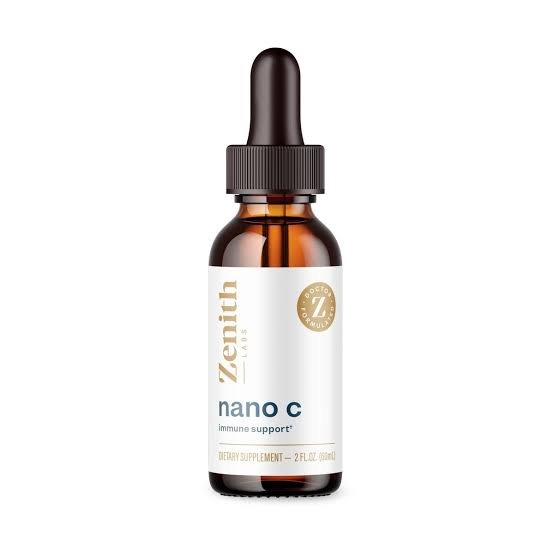
Nano C is a liquid vitamin C supplement distributed by Zenith Labs, sold in a 2 fl oz (60 mL) dropper bottle providing 30 servings. The label directs adults to take one dropperful (2 mL) daily, either directly or as directed by a healthcare professional. Each serving supplies 500 mg of vitamin C as sodium ascorbate, formulated with what the label calls “Nanozorb technology,” and delivers 556% of the Daily Value.
The product is positioned as a fast-absorbing alternative to capsules and tablets, using nano-sized vitamin C particles to support absorption. It carries standard claims of being gluten-free, dairy-free, soy-free, nut-free, non-GMO, and “doctor formulated”. One independent label-scoring site rates its formulation cleanliness highly (23/25) for avoiding artificial colors and sweeteners, while noting that its dosage transparency and ingredient profile scores are lower because the formula is a single-ingredient product with minimal supporting data.
What’s in It
The label is short and straightforward:
- Vitamin C (sodium ascorbate with Nanozorb technology): 500 mg — 556% DV
- Other ingredients: distilled water, glycerin, erythritol, potassium sorbate, natural flavors
That is the complete panel. There are no botanicals, no proprietary blends, and no hidden stimulants. For anyone who wants a single-ingredient vitamin C product with a clean excipient list, the disclosure is better than average.
The trade-off is that there is no second ingredient to broaden the formula’s application. It is vitamin C, delivered in liquid form, with a technology claim attached to it. Whether that technology delivers a meaningful advantage is discussed below.
How It’s Positioned to Work
Nano C’s marketing centers on particle size and absorption. The “Nanozorb” technology is described as reducing vitamin C particles to a nano-scale so they are absorbed more efficiently than conventional forms. The seller’s promotional materials claim the liquid format and sublingual dosing support faster uptake than capsules.
What the evidence supports: Vitamin C itself has strong, well-established research behind it. It supports immune cell function, provides antioxidant protection, and serves as an essential cofactor for collagen synthesis. Regular supplementation may modestly reduce the duration of a cold, though it does not prevent colds from occurring.
Where the claims are thinner: No independent clinical trial of the finished Nano C formula was located, and the “Nanozorb” bioavailability claim is a manufacturer statement rather than a peer-reviewed finding for this specific product. Nano-sizing generally increases surface area and can improve absorption for some compounds, but the specific percentage claims are not independently verified.
A note on availability: As of September 2026, one label-tracking database listed Nano C as off-market — no longer available for purchase through the primary channel, though label data is preserved. Amazon listings and some international retailers still show the product, so availability varies by region and seller. If you are ordering, confirm the seller is authorized and the bottle is current stock.

What It May Be Good For
A convenient liquid format. For anyone who dislikes swallowing capsules or tablets, a dropper is easier to take consistently. Consistency matters more than form for a daily vitamin.
A single-ingredient vitamin C option. If you want vitamin C without added botanicals, blends, or stimulants, the label is clean and the dose is clearly stated.
Immune support during periods of increased demand. Vitamin C is a legitimate nutrient with established roles in immune function and antioxidant defense. A 500 mg dose covers daily needs with room to spare.
Gentle on the stomach for some users. At least one reviewer noted that Nano C was easier on the stomach than other vitamin C products they had tried, which is consistent with sodium ascorbate being a less acidic form than ascorbic acid.
A routine anchor. A morning dropper can serve as a simple daily habit marker, which supports adherence to broader wellness routines.
What to Keep Expectations Realistic About
Dramatic immune “boosting.” Vitamin C supports normal immune function; it does not “boost” immunity beyond normal levels, and it does not prevent colds. The evidence supports modest reduction in cold duration, not immunity enhancement.
A verified absorption advantage. The nano-technology claim is a manufacturer statement. No independent head-to-head trial of Nano C versus standard vitamin C was located.
Taste neutrality. Amazon customer feedback is mixed on taste, with several reviewers describing it as salty — a predictable outcome of sodium ascorbate in liquid form. If you are sensitive to salty flavors, this is worth knowing before ordering.
Bottle and pump reliability. Some customer complaints describe the dropper or pump failing after a short period, making the product difficult to dispense. These are packaging complaints rather than efficacy complaints, but they affect usability.
A consistent purchase channel. Availability is inconsistent. Some databases list the product as off-market, while marketplace listings persist. Buying from an authorized seller matters for both authenticity and any refund claim.
Company-level reassurance. Zenith Labs has mixed independent trust signals across its product lines, including complaints about order cancellation and refund handling on other products. This does not establish anything about Nano C specifically, but it is relevant to how you approach the purchase.
Who It Suits
- Adults who want a single-ingredient liquid vitamin C with a clearly disclosed dose
- People who prefer droppers over capsules and will actually stick to a daily routine
- Anyone whose diet may have a genuine vitamin C gap and who wants a straightforward top-up
- Shoppers who value a clean excipient list — no artificial colors or sweeteners
- People who have found ascorbic acid too acidic and want to try sodium ascorbate
Who Should Skip It
- Anyone expecting vitamin C to prevent colds or “boost” immunity beyond normal function
- People who need verified absorption data before purchasing — that data does not exist publicly for this product
- Anyone sensitive to salty taste in supplements
- Individuals with kidney stone history or kidney disease, or those on ACE inhibitors, without medical clearance — vitamin C and sodium content both warrant a conversation with a doctor
- Smokers or people with high iron absorption concerns, who should discuss dosing with a clinician
- Shoppers who cannot confirm the seller is authorized and the product is current stock, given the off-market listing
- Anyone who wants a multi-nutrient immune formula rather than a single vitamin
Practical Buying Notes
- Confirm the seller is authorized. One database lists Nano C as off-market, while marketplace and international listings persist. Verify stock status and seller legitimacy before paying.
- Check the price against the format. Consumer Health Digest lists the price at **$49** for a 2 oz bottle. Marketplace prices vary, sometimes substantially. A 30-serving bottle at $49 works out to roughly $1.63 per serving — compare that to standard vitamin C tablets, which cost a fraction of that per dose.
- Read the label on the bottle you receive and compare it with the panel described here: 500 mg sodium ascorbate, 556% DV, 2 mL serving, 30 servings.
- Inspect the dropper on arrival. Several customer complaints concern pump or dropper failure shortly after opening. Testing it on day one is easier than discovering the problem on day twenty.
- Check refund terms before ordering. Zenith Labs product pages have historically referenced guarantees on other products, but the specific terms for Nano C should be confirmed at checkout. Keep the order confirmation.
- Buy from the official or authorized channel rather than a third-party marketplace listing, so the product is authentic and any refund path remains intact.
Bottom Line
Nano C is a simple, cleanly labeled liquid vitamin C supplement — 500 mg of sodium ascorbate per dropperful, a short excipient list, no proprietary blends, and a format that some people find easier to take consistently than capsules. Vitamin C itself is one of the better-supported nutrients in the supplement aisle, with established roles in immune function, antioxidant defense, and collagen synthesis.
Its limitations are the same ones that apply to most premium-format vitamins. The “Nanozorb” absorption advantage is a manufacturer claim, not an independently verified finding; the product has no published clinical trial of its own; the taste is reportedly salty for some users; and the availability is inconsistent, with at least one database listing it as off-market. At roughly $1.63 per serving, it is significantly more expensive than standard vitamin C tablets that deliver the same 500 mg dose.
If you want a single-ingredient liquid vitamin C and you value the dropper format and clean label enough to pay a premium for them, it is a reasonable choice — provided you confirm the seller and current stock. If you simply want vitamin C at an effective dose with verified label disclosure and no format premium, standard tablets or capsules will do the same job for far less.
This article is for informational purposes only and is not medical advice. Statements about dietary supplements have not been evaluated by the FDA. Consult a healthcare professional before starting any supplement.
Editor’s notes: (1) Confirm or remove the author byline — do not use “Dr./MD” unless verified. (2) Verify current availability and pricing at checkout before publishing — one database lists Nano C as off-market as of September 2026, while marketplace listings persist. (3) The “Nanozorb” absorption claim is a manufacturer statement with no independent product-level trial; do not present it as established fact. (4) The $49 price is sourced from Consumer Health Digest and should be reconfirmed. (5) Company-level trust signals about Zenith Labs concern other products and should not be presented as findings about Nano C itself. (6) Do not add efficacy claims beyond the established vitamin C research.